
Author Liesel K. Hill's Musings on Fantasia...
Wednesday, January 18, 2017
Why Authors Should Read Motivational Books
 |
| Source |
So right now I'm reading Brendon Burchard's The Charge and I'm loving it. It's fantastic. So inspirational! And it's meant to be. It's motivational book, after all. But that's not why I'm advising authors to read books like this.
 |
| Picture Source |
Let's talk about THEME for a minute. All stories we write have themes, yeah? Part of our craft is learning to incorporate theme into plot so that it's a natural part of the story. So we aren't telling or sounding to preachy. But sometimes, it can be a challenge to figure out what theme we're going for in a story.
A story that meanders along and needs help probably doesn't have a concrete theme. Once the author figures out the theme, the entire story comes together. And this doesn't always happen by the author having a light bulb moment about "theme." Sometimes by figuring out events in the plot, things fall into place. But chances are those events complete a theme the author didn't even know they were aiming for. It's a beautiful thing when that happens.
So what's that got to do with motivational books or my current read?
Well, it's been a while since I read a motivational book. Probably about a year. But I've been annotating the crap out of this book. So many of the statements in it have jumped out at me as relevant to my WIPs. I've thought a lot about why that is. Some of the topics covered by author include how to train our brains to be motivated and follow through on our goals and aspirations. He talks about mechanisms in the brain that are keeping us from doing that.
"Emotion, it turns out, is the spark that compels us to care in the first place."--Brendon Burchard, The Charge, pg 100.
Since my Interchron series is all about the brain and how it connects to the soul, obviously this is going to strike a chord with me.
But that's not all that's jumped out at me. Other things have struck me as relevant to other novels, including my crime fiction series and the high fantasy/dragon series that I'm still working on and haven't started publishing yet. So it can't just be a matter of something being specific to me and oh what great luck that I picked this book up. It's more than that.
Finally, the other day, it hit me: General, true, motivational statements are inherent themes.
"Our desire to bond and belong outweighs almost every other desire--often even our desire for survival..."--Brendon Burchard, The Charge, pg. 117
Let's take a really vague and obvious example like "You should always put your children first." Now, again, if you have your characters say this a million times, or point it out in the narrative a bunch of times, that will come off as preachy and it's obvious the author is trying to tell their audience something. A great writer will create a story with flawed characters and show this theme. Make the audience really feel it. Maybe even show the negative consequences of when this isn't done.
But you all know that. It's the definition of great story-telling, right?

My point is that motivational statements, by definition, are themes. Not every motivation statement you read will be applicable to your WIP by far, but some will. They can help you come up with theme, which can only help you craft your story more effectively. So if this is something you're struggling with, pick up a motivational book.
"There is a bolder man inside you than the one sitting next to me now."--Brendon Burchard, The Charge, pg. 145.
My personal and of course very objective suggestion would be The Charge. ;D
Do you struggle with theme? How do you push through to define it? What's your favorite motivational book?

Monday, January 16, 2017
Monday Thoughts for Writing Inspiration
Good morning and Happy Monday! Hope everyone had a phenomenal weekend. I was actually very productive this weekend. Quite proud of myself.
So just a quick thought this morning. Last week I was watching a film with my brothers and something came into my mind. And the funny thing is that it really had nothing at all to do with what I watching. It was sparked by the film, but was completely unrelated to the plot and themes of the film. (Ah the magic of inspiration.)
So the thought was just this:
 Probably sounds very random to most people, but I've had my dystopian saga, Interchron, on the brain lately, and I'm sure what this turn of thought was about. I'm currently working on my crime fiction series, but next month I'll get back to Interchron. I'll probably find a way to incorporate this thought into the story.
It was just my latest random inspiration, so I thought I'd share it. Remember, such things can come from absolutely anywhere.
Where did your latest, most random inspiration come from?
Persistence of Vision, Book 1 of Interchron available on Amazon and most major retailers.
Quantum Entanglement, Book 2 of Interchron available on Amazon and most other retailers.
So just a quick thought this morning. Last week I was watching a film with my brothers and something came into my mind. And the funny thing is that it really had nothing at all to do with what I watching. It was sparked by the film, but was completely unrelated to the plot and themes of the film. (Ah the magic of inspiration.)
So the thought was just this:
This is what people do. They find like-minded people, get together and find ways to express themselves. Even if the powers that be say the can't or try to stop them, they'll find some other way, some other place to do it.

It was just my latest random inspiration, so I thought I'd share it. Remember, such things can come from absolutely anywhere.
Where did your latest, most random inspiration come from?
Persistence of Vision, Book 1 of Interchron available on Amazon and most major retailers.
Quantum Entanglement, Book 2 of Interchron available on Amazon and most other retailers.
Friday, January 13, 2017
Friday Funnies + Week in Review

Week in Review
Words Written: 7,512. So obviously better than last week, but honestly still a bit under where I'd like to be. Don't get me wrong, I'm happy with that word count, but I'd like to average at least 2,000 words per day for at least 5 days a week. So I'd like to be more in the 10-12,000 words per week range. But I'm getting there. Working up to it, I suppose. :D
Books Read: Still reading Neil Gaimon's American Gods and Brandon Burchard's The Charge. Haven't finished either, but moving along nicely in both.
Short Story: Ugh. I brainstormed ideas. That's it. I suppose if I can pick one and build on it I might get an outline done this week. Wish me luck!
 |
| Source |
Welcome to Friday Funnies! Because everyone needs a good laugh on Friday.
 |
| Source |
I put this on my Instagram account last week. The faces are just priceless! ;D
How has your writing week been? Do you make these faces when reading/writing? ;D
Wednesday, January 11, 2017
The Rewards of Strong Characterization
 |
| Source |
 |
| Add to Goodreads |
So I wrote her that way. She has her fears, of course, but they're all internal. The persona she projects to the world is utterly confident. No fear at all.
And I've been surprised to see the response I've gotten from readers about Kyra. She's turned out to be very polarizing.
Some people--more often men, which I think is funny in terms of psychology--think she's crazy. Like, totally insane. The choices she makes, the things she takes on... I've gotten a few comments along the lines of "this chick is nuts!"
Others, conversely, really love her. Some of the best reviews I've gotten (HERE) center on Kyra and how brave she is.
 |
| Add to Goodreads |
For the record, I didn't write her to be a "crazy" character. Just crazy-brave. But I kind of like that she's polarizing my audience. It makes me smile and I'm endlessly fascinated by people's reaction to her.
I also think it's a good example of what happens when you not only stick to your characterization, but make your character's traits--whatever they may be--VERY strong. Even if that trait is timidity, run with that. Make it dominant. Make your character's personality traits strong and obvious. If you do that, the character takes on a reality all their own, and the audience will develop their own, very strong, opinions about the character, just as they would about real people.
It's awesome to see.
Dark Remnants, Book 1 of Street Games is FREE on Amazon, B&N and most other major retailers.
Desolate Mantle, Book 2 of Street Games is currently available only on Amazon.
Have you ever come across a character that polarizes people? Why do you think that was?
Monday, January 9, 2017
Accuracy in Historical Fiction: The Histfic Writing Process
Good morning, Fiction Lovers! How was your weekend? Good, I hope. Mine was great! Fun, but busy. And VERY snowy here in Utah.
 Today I want to talk about the writing process where historical fiction is concerned. Probably the biggest question I've been asked about my historical fiction writing process since Citadels of Fire released is how I go about separating fact from fiction in my historical stories? How do I decide what to keep and what to change?
It's a great question! Unfortunately, there's not a cut and dried answer. There aren't any rules that apply across the board. As I mentioned in my IWSG post last week, any rules are really just guidelines. It's up to the author and what they're trying to accomplish. Let me illustrate:
For most historical eras (and the farther back you go, the more this is true) we don't have many specific records for specific people. There are, of course, the infamous "annals of history" but they often leave things out, and are usually written by the victors of any conflict, which can make them very one-sided. In many cases, we living in this modern era can look at the entire picture and draw more objective conclusions than what the victors of the time would have had us believe. Still, that's not always done and sometimes it's not always even possible.
But certainly before the information age we didn't have websites detailing the reigns kings and queens, or the personal blogs of peasants and knights. (Wouldn't that be cool?!) We're lucky when bits and pieces of journals or other personal effects survive into our age.
So this is where our fiction skills come into play. And I use the word "skills" because a lot of insight must be used here. In my opinion, a good historical fiction writer doesn't just force historical figures or events into their story. Of course character and story need always come first in great fiction, but to change historical events to fit your story strays into the alternate history genre. And that's totally fine if that's what you write, but it's not, in my opinion, exactly the same as historical fiction.
(And yes, I'm being very nit-picky here. These are nuances. Most people--most readers, in fact--would just say, "who cares? History is history is history." But a writer has to take these things into account.)
So that's why I take the angle I do on historical fiction. I do everything in my power not to change any actual historical events to fit my story. I have been known to mess with the timeline a bit, but what year it happened in, in my opinion, isn't nearly as essential as what actually went down. (Of course that's just one writer's opinion. I'm sure there are some who would take the opposite angle and would have valid reasons for it.)
The skills come into play in a big way in historical fiction through analyzing character motivation. You have to be able to look at the events--those we do have record of--and make deductions about why certain people chose to do what they did, what their motivations would have been, and what they would have been feeling. That's far more difficult than simply bending historical events to fit your story. It also brings history into the story in a much more concrete way, and helps your readers connect with the history, as well as the character.
With a few well-documented exceptions, we have little in the way of exact conversations--much less internal thoughts--of historical figures. So this is where things get fun and creative. What was the character's reasoning for their decisions? What thoughts and feelings would have led the to that reasoning? Especially when we're talking the decisions of kings, queens, and generals that often led to war, death, and devastation.
So for my Kremlins trilogy, which is based on the reign of Ivan the Terrible, we have plenty of records of what happened, what Ivan did, and what the results were. But the real fascination for me is exploring his psyche and what made him the way he was. Although more harsh than most of us are, Ivan was a relatively decent man in his young adult years. But he slid into utter madness after his wife's death, and an entire nation suffered for it.
Ah, the stuff of historical legend. Makes for a brutal and compelling story.
That said, I always include a historical note so the reader knows what, if anything, I've changed for the story. I think it's the duty of histfic writers to make sure readers get an accurate view of history. Histfic readers are phenomenally intelligent. They get that histfic will have make some non-historical changes. Most I've talked to tell me that, when enthralled with a historical era they've read about, they immediately jump online and read up on the facts themselves, so it's not a huge problem. But at the same time, I would never want to mislead anyone as to what actually happened in history. So as long as you make clear to the reader what compromises you've made to serve your story, and you're being as true to the history as you know how, I think the reader will go with you and simply enjoy your book.
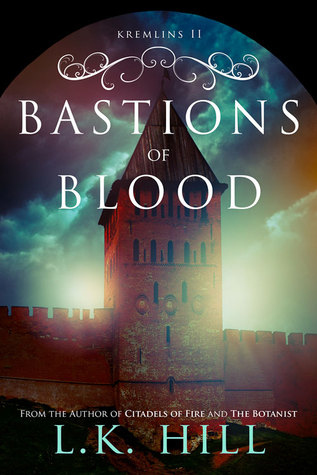 The second question I'm being asked a lot is when book 2, Bastions of Blood, will be released. Unfortuately, I don't know yet. I'm in a bit of a hurry-up-and-wait situation with book 2. The publisher that was supposed to release it nearly went under a few months ago. They were bought out by another imprint who decided not to publish book 2. So I'm in the process of copyright-reversion for BoB. It's all cued up and ready for release, but not all of the legalities are squared away yet, and obviously those have to be honored.
I'm hoping it will all work itself out in the next month or so. I'll announce the release date as soon as I know what it is. Promise. I can't wait for everyone to read part 2 of Taras and Inga's saga.
(Book 1 available through Amazon, B&N and most other major retailers.)
What are your views on historical accuracy in historical fiction?
It's a great question! Unfortunately, there's not a cut and dried answer. There aren't any rules that apply across the board. As I mentioned in my IWSG post last week, any rules are really just guidelines. It's up to the author and what they're trying to accomplish. Let me illustrate:
For most historical eras (and the farther back you go, the more this is true) we don't have many specific records for specific people. There are, of course, the infamous "annals of history" but they often leave things out, and are usually written by the victors of any conflict, which can make them very one-sided. In many cases, we living in this modern era can look at the entire picture and draw more objective conclusions than what the victors of the time would have had us believe. Still, that's not always done and sometimes it's not always even possible.
But certainly before the information age we didn't have websites detailing the reigns kings and queens, or the personal blogs of peasants and knights. (Wouldn't that be cool?!) We're lucky when bits and pieces of journals or other personal effects survive into our age.
So this is where our fiction skills come into play. And I use the word "skills" because a lot of insight must be used here. In my opinion, a good historical fiction writer doesn't just force historical figures or events into their story. Of course character and story need always come first in great fiction, but to change historical events to fit your story strays into the alternate history genre. And that's totally fine if that's what you write, but it's not, in my opinion, exactly the same as historical fiction.
(And yes, I'm being very nit-picky here. These are nuances. Most people--most readers, in fact--would just say, "who cares? History is history is history." But a writer has to take these things into account.)
So that's why I take the angle I do on historical fiction. I do everything in my power not to change any actual historical events to fit my story. I have been known to mess with the timeline a bit, but what year it happened in, in my opinion, isn't nearly as essential as what actually went down. (Of course that's just one writer's opinion. I'm sure there are some who would take the opposite angle and would have valid reasons for it.)
 |
| Source |

With a few well-documented exceptions, we have little in the way of exact conversations--much less internal thoughts--of historical figures. So this is where things get fun and creative. What was the character's reasoning for their decisions? What thoughts and feelings would have led the to that reasoning? Especially when we're talking the decisions of kings, queens, and generals that often led to war, death, and devastation.
So for my Kremlins trilogy, which is based on the reign of Ivan the Terrible, we have plenty of records of what happened, what Ivan did, and what the results were. But the real fascination for me is exploring his psyche and what made him the way he was. Although more harsh than most of us are, Ivan was a relatively decent man in his young adult years. But he slid into utter madness after his wife's death, and an entire nation suffered for it.
That said, I always include a historical note so the reader knows what, if anything, I've changed for the story. I think it's the duty of histfic writers to make sure readers get an accurate view of history. Histfic readers are phenomenally intelligent. They get that histfic will have make some non-historical changes. Most I've talked to tell me that, when enthralled with a historical era they've read about, they immediately jump online and read up on the facts themselves, so it's not a huge problem. But at the same time, I would never want to mislead anyone as to what actually happened in history. So as long as you make clear to the reader what compromises you've made to serve your story, and you're being as true to the history as you know how, I think the reader will go with you and simply enjoy your book.
I'm hoping it will all work itself out in the next month or so. I'll announce the release date as soon as I know what it is. Promise. I can't wait for everyone to read part 2 of Taras and Inga's saga.
(Book 1 available through Amazon, B&N and most other major retailers.)
What are your views on historical accuracy in historical fiction?
Friday, January 6, 2017
Friday Funnies + Week in Review
Good morning and Happy Friday! Welcome to Friday Funnies and my Week in Review.
Friday Funnies is something I've done for a while (when I actually get around to it). I just post humorous things I find around the internet to give everyone a good laugh. I'll also start my Week in Review today. It's mostly to keep me accountable to my goals and New Years Resolutions. I'll be just giving numbers, mostly. How many words I've written this week, how I'm doing on my reading, etc. And maybe say a word or two about my writing week.
Welcome to Friday Funnies! Because everyone needs a good laugh on Friday.
Since I went and saw Rogue One about a week ago, and LOVED it, I thought I'd go with some fun Star Wars humor today:
Friday Funnies is something I've done for a while (when I actually get around to it). I just post humorous things I find around the internet to give everyone a good laugh. I'll also start my Week in Review today. It's mostly to keep me accountable to my goals and New Years Resolutions. I'll be just giving numbers, mostly. How many words I've written this week, how I'm doing on my reading, etc. And maybe say a word or two about my writing week.
Week in Review
(Whoops! Forgot to update this last night. Fixing now. See, still getting into the grove. ;D)
Words Written: 5,000-ish. I hope to get more done that that most weeks, but I spent a good deal of time planning and outlining in Scrivner. For a first week, I'm happy with that number.
Books Read: Currently reading Neil Gaimon's American Gods and Brandon Burchard's The Charge. The charge is inspirational and I'm liking it a lot. I've never read Gaimon before and I'm finding American Gods somewhat bizarre, but I'm not thinking of putting it down. Interested to see where it goes.
Short Story: Haven't even started this month's short story yet. Gonna make it a priority first thing next week. ;D
How did you do on your writing goals this week?
|
| Source |
Since I went and saw Rogue One about a week ago, and LOVED it, I thought I'd go with some fun Star Wars humor today:
 |
| Source |
 |
| Source |
 |
| Source |
Wednesday, January 4, 2017
IWSG for 2017: Writing Rules and New Years Resolutions

Purpose: To share and encourage. Writers can express doubts and concerns without fear of appearing foolish or weak. Those who have been through the fire can offer assistance and guidance. It’s a safe haven for insecure writers of all kinds!
Posting: The first Wednesday of every month is officially Insecure Writer’s Support Group day.
Details HERE and as always thanks to our wonderful host, Alex J. Cavanaugh
Being the first month of a new year, I'm sure this will get said a lot, but I think the thing I'm most insecure about right now is sticking to my New Years Resolutions. Suffice it to say, the past few years I've made goals but attained almost none of them. Of course that's because I let things get in the way of working toward them.
I'm in a better position and mindset to accomplish my goals than I have been in previous years, so I'm more optimistic than ever, but of course there's always the fear of failure, especially because we all tend to put some much pressure on ourselves in January.
But one thing I've learned this past year is just never to throw in the towel. Even if you don't achieve your goals, working steadily on them will yield better results than we can generally conceive of. So that's what I plan to do. And maybe, just maybe, I'll achieve one or two of my lofty writing resolutions.
January Question: What writing rule do you wish you'd never heard of?
Hm. This is a tough one for me. I don't generally take a negative attitude toward any writing "rule," whether I employ it or not. I suppose my only response is that I don't treat any writing "rule" like a hard and fast rule. If I tried to stay within such a rigid structure, I'd go crazy. So I guess all writing rules are ones I wish I'd never heard of, but it's not a problem for me because I never go out of my way to adhere to them.
 |
| Source |
What are you insecure about this month?
Subscribe to:
Posts
(
Atom
)