
Author Liesel K. Hill's Musings on Fantasia...
Showing posts with label histfic. Show all posts
Showing posts with label histfic. Show all posts
Monday, January 9, 2017
Accuracy in Historical Fiction: The Histfic Writing Process
Good morning, Fiction Lovers! How was your weekend? Good, I hope. Mine was great! Fun, but busy. And VERY snowy here in Utah.
 Today I want to talk about the writing process where historical fiction is concerned. Probably the biggest question I've been asked about my historical fiction writing process since Citadels of Fire released is how I go about separating fact from fiction in my historical stories? How do I decide what to keep and what to change?
It's a great question! Unfortunately, there's not a cut and dried answer. There aren't any rules that apply across the board. As I mentioned in my IWSG post last week, any rules are really just guidelines. It's up to the author and what they're trying to accomplish. Let me illustrate:
For most historical eras (and the farther back you go, the more this is true) we don't have many specific records for specific people. There are, of course, the infamous "annals of history" but they often leave things out, and are usually written by the victors of any conflict, which can make them very one-sided. In many cases, we living in this modern era can look at the entire picture and draw more objective conclusions than what the victors of the time would have had us believe. Still, that's not always done and sometimes it's not always even possible.
But certainly before the information age we didn't have websites detailing the reigns kings and queens, or the personal blogs of peasants and knights. (Wouldn't that be cool?!) We're lucky when bits and pieces of journals or other personal effects survive into our age.
So this is where our fiction skills come into play. And I use the word "skills" because a lot of insight must be used here. In my opinion, a good historical fiction writer doesn't just force historical figures or events into their story. Of course character and story need always come first in great fiction, but to change historical events to fit your story strays into the alternate history genre. And that's totally fine if that's what you write, but it's not, in my opinion, exactly the same as historical fiction.
(And yes, I'm being very nit-picky here. These are nuances. Most people--most readers, in fact--would just say, "who cares? History is history is history." But a writer has to take these things into account.)
So that's why I take the angle I do on historical fiction. I do everything in my power not to change any actual historical events to fit my story. I have been known to mess with the timeline a bit, but what year it happened in, in my opinion, isn't nearly as essential as what actually went down. (Of course that's just one writer's opinion. I'm sure there are some who would take the opposite angle and would have valid reasons for it.)
The skills come into play in a big way in historical fiction through analyzing character motivation. You have to be able to look at the events--those we do have record of--and make deductions about why certain people chose to do what they did, what their motivations would have been, and what they would have been feeling. That's far more difficult than simply bending historical events to fit your story. It also brings history into the story in a much more concrete way, and helps your readers connect with the history, as well as the character.
With a few well-documented exceptions, we have little in the way of exact conversations--much less internal thoughts--of historical figures. So this is where things get fun and creative. What was the character's reasoning for their decisions? What thoughts and feelings would have led the to that reasoning? Especially when we're talking the decisions of kings, queens, and generals that often led to war, death, and devastation.
So for my Kremlins trilogy, which is based on the reign of Ivan the Terrible, we have plenty of records of what happened, what Ivan did, and what the results were. But the real fascination for me is exploring his psyche and what made him the way he was. Although more harsh than most of us are, Ivan was a relatively decent man in his young adult years. But he slid into utter madness after his wife's death, and an entire nation suffered for it.
Ah, the stuff of historical legend. Makes for a brutal and compelling story.
That said, I always include a historical note so the reader knows what, if anything, I've changed for the story. I think it's the duty of histfic writers to make sure readers get an accurate view of history. Histfic readers are phenomenally intelligent. They get that histfic will have make some non-historical changes. Most I've talked to tell me that, when enthralled with a historical era they've read about, they immediately jump online and read up on the facts themselves, so it's not a huge problem. But at the same time, I would never want to mislead anyone as to what actually happened in history. So as long as you make clear to the reader what compromises you've made to serve your story, and you're being as true to the history as you know how, I think the reader will go with you and simply enjoy your book.
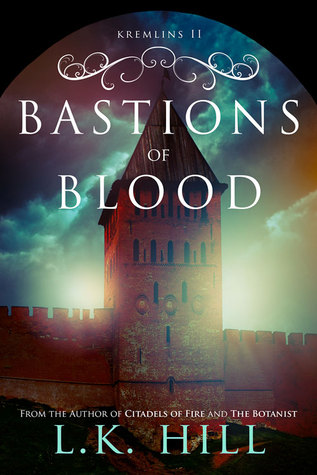 The second question I'm being asked a lot is when book 2, Bastions of Blood, will be released. Unfortuately, I don't know yet. I'm in a bit of a hurry-up-and-wait situation with book 2. The publisher that was supposed to release it nearly went under a few months ago. They were bought out by another imprint who decided not to publish book 2. So I'm in the process of copyright-reversion for BoB. It's all cued up and ready for release, but not all of the legalities are squared away yet, and obviously those have to be honored.
I'm hoping it will all work itself out in the next month or so. I'll announce the release date as soon as I know what it is. Promise. I can't wait for everyone to read part 2 of Taras and Inga's saga.
(Book 1 available through Amazon, B&N and most other major retailers.)
What are your views on historical accuracy in historical fiction?
It's a great question! Unfortunately, there's not a cut and dried answer. There aren't any rules that apply across the board. As I mentioned in my IWSG post last week, any rules are really just guidelines. It's up to the author and what they're trying to accomplish. Let me illustrate:
For most historical eras (and the farther back you go, the more this is true) we don't have many specific records for specific people. There are, of course, the infamous "annals of history" but they often leave things out, and are usually written by the victors of any conflict, which can make them very one-sided. In many cases, we living in this modern era can look at the entire picture and draw more objective conclusions than what the victors of the time would have had us believe. Still, that's not always done and sometimes it's not always even possible.
But certainly before the information age we didn't have websites detailing the reigns kings and queens, or the personal blogs of peasants and knights. (Wouldn't that be cool?!) We're lucky when bits and pieces of journals or other personal effects survive into our age.
So this is where our fiction skills come into play. And I use the word "skills" because a lot of insight must be used here. In my opinion, a good historical fiction writer doesn't just force historical figures or events into their story. Of course character and story need always come first in great fiction, but to change historical events to fit your story strays into the alternate history genre. And that's totally fine if that's what you write, but it's not, in my opinion, exactly the same as historical fiction.
(And yes, I'm being very nit-picky here. These are nuances. Most people--most readers, in fact--would just say, "who cares? History is history is history." But a writer has to take these things into account.)
So that's why I take the angle I do on historical fiction. I do everything in my power not to change any actual historical events to fit my story. I have been known to mess with the timeline a bit, but what year it happened in, in my opinion, isn't nearly as essential as what actually went down. (Of course that's just one writer's opinion. I'm sure there are some who would take the opposite angle and would have valid reasons for it.)
.JPG) |
| Source |
With a few well-documented exceptions, we have little in the way of exact conversations--much less internal thoughts--of historical figures. So this is where things get fun and creative. What was the character's reasoning for their decisions? What thoughts and feelings would have led the to that reasoning? Especially when we're talking the decisions of kings, queens, and generals that often led to war, death, and devastation.
So for my Kremlins trilogy, which is based on the reign of Ivan the Terrible, we have plenty of records of what happened, what Ivan did, and what the results were. But the real fascination for me is exploring his psyche and what made him the way he was. Although more harsh than most of us are, Ivan was a relatively decent man in his young adult years. But he slid into utter madness after his wife's death, and an entire nation suffered for it.
That said, I always include a historical note so the reader knows what, if anything, I've changed for the story. I think it's the duty of histfic writers to make sure readers get an accurate view of history. Histfic readers are phenomenally intelligent. They get that histfic will have make some non-historical changes. Most I've talked to tell me that, when enthralled with a historical era they've read about, they immediately jump online and read up on the facts themselves, so it's not a huge problem. But at the same time, I would never want to mislead anyone as to what actually happened in history. So as long as you make clear to the reader what compromises you've made to serve your story, and you're being as true to the history as you know how, I think the reader will go with you and simply enjoy your book.
I'm hoping it will all work itself out in the next month or so. I'll announce the release date as soon as I know what it is. Promise. I can't wait for everyone to read part 2 of Taras and Inga's saga.
(Book 1 available through Amazon, B&N and most other major retailers.)
What are your views on historical accuracy in historical fiction?

.JPG)
Friday, September 25, 2015
Cover Reveal: Bastions of Blood
Here, finally, is the cover art for book 2 of my historical romance: Kremlins. The second installment is entitled, Bastions of Blood.
And yet another shout-out to the art department at Jolly Fish Press. They always do such a phenomenal job on the covers!


And yet another shout-out to the art department at Jolly Fish Press. They always do such a phenomenal job on the covers!

Inga has finally found the courage to engage in a relationship with Taras, the only man she’s ever loved, but the winter winds blow cold in Russia, and happiness is short-lived.
On the heels of a triumphant victory, Tsar Ivan falls ill and nearly dies, followed by his beloved wife. Everyone knows that Anastasia’s influence on Ivan has been profound. Because she holds both the Tsar’s ear and heart, no one dares harm her. As her condition worsens, Inga sees glimpses of the sadistic creature Ivan was before he married, and knows things are about to become much worse.
As Inga fears the future, Taras looks to the past, searching for the elusive answers to his mother’s death. As mystery piles upon mystery, and everyone refuses to talk, Taras begins to wonder if he’ll ever truly understand the event that has plagued him since childhood.
As Ivan’s madness grows, he lashes out, and all of Russia feels the sting. Things darken in the Kremlin and the countryside fills with blood. Inga and Taras cling to one another to survive the new nightmare. If no one reins Ivan in, they may end up losing more than their lives.
What do you think of the Bastions of Blood cover?
Thursday, May 29, 2014
Thoughts for Thursday: Historical Fiction

Just have fun, collect awesome sayings by awesome people, and try to be inspired!
My historical fiction debut, Citadels of Fire is available now, and the launch party is this Saturday! In honor of that, this week's theme is Historical Fiction!
"I have always regarded historical fiction and fantasy as sisters under the skin, two genres separated at birth."--George R.R. Martin
"I am not a fan of historical fiction that is sloppy in its research or is dishonest about the real history."--Kate Mosse
"When I was growing up I loved reading historical fiction, but too often it was about males; or, if it was about females, they were girls who were going to be famous like Betsy Ross, Clara Barton, or Harriet Tubman. No one ever wrote about plain, normal, everyday girls."--Kathryn Lasky
"Concentrate your narrative energy on the point of change. This is especially important for historical fiction. When your character is new to a place, or things alter around them, that's the point to step back and fill in the details of their world."--Hilary Mantel
"I got nice rejections explaining that historical fiction was a difficult sell. But I kept trying..."--Anita Diament
"Knowledge of our past is our inheritance. What we do with that knowledge will shape our destinies."--L.K.Hill
So many of these apply to me or to my historical fiction novel! That last one is mine! Head over to my other blog to read some more amazing quotes about historical fiction!
What's your favorite quote about historical fiction? Do you have one to add?
Subscribe to:
Posts
(
Atom
)