
Author Liesel K. Hill's Musings on Fantasia...
Showing posts with label History. Show all posts
Showing posts with label History. Show all posts
Monday, January 9, 2017
Accuracy in Historical Fiction: The Histfic Writing Process
Good morning, Fiction Lovers! How was your weekend? Good, I hope. Mine was great! Fun, but busy. And VERY snowy here in Utah.
 Today I want to talk about the writing process where historical fiction is concerned. Probably the biggest question I've been asked about my historical fiction writing process since Citadels of Fire released is how I go about separating fact from fiction in my historical stories? How do I decide what to keep and what to change?
It's a great question! Unfortunately, there's not a cut and dried answer. There aren't any rules that apply across the board. As I mentioned in my IWSG post last week, any rules are really just guidelines. It's up to the author and what they're trying to accomplish. Let me illustrate:
For most historical eras (and the farther back you go, the more this is true) we don't have many specific records for specific people. There are, of course, the infamous "annals of history" but they often leave things out, and are usually written by the victors of any conflict, which can make them very one-sided. In many cases, we living in this modern era can look at the entire picture and draw more objective conclusions than what the victors of the time would have had us believe. Still, that's not always done and sometimes it's not always even possible.
But certainly before the information age we didn't have websites detailing the reigns kings and queens, or the personal blogs of peasants and knights. (Wouldn't that be cool?!) We're lucky when bits and pieces of journals or other personal effects survive into our age.
So this is where our fiction skills come into play. And I use the word "skills" because a lot of insight must be used here. In my opinion, a good historical fiction writer doesn't just force historical figures or events into their story. Of course character and story need always come first in great fiction, but to change historical events to fit your story strays into the alternate history genre. And that's totally fine if that's what you write, but it's not, in my opinion, exactly the same as historical fiction.
(And yes, I'm being very nit-picky here. These are nuances. Most people--most readers, in fact--would just say, "who cares? History is history is history." But a writer has to take these things into account.)
So that's why I take the angle I do on historical fiction. I do everything in my power not to change any actual historical events to fit my story. I have been known to mess with the timeline a bit, but what year it happened in, in my opinion, isn't nearly as essential as what actually went down. (Of course that's just one writer's opinion. I'm sure there are some who would take the opposite angle and would have valid reasons for it.)
The skills come into play in a big way in historical fiction through analyzing character motivation. You have to be able to look at the events--those we do have record of--and make deductions about why certain people chose to do what they did, what their motivations would have been, and what they would have been feeling. That's far more difficult than simply bending historical events to fit your story. It also brings history into the story in a much more concrete way, and helps your readers connect with the history, as well as the character.
With a few well-documented exceptions, we have little in the way of exact conversations--much less internal thoughts--of historical figures. So this is where things get fun and creative. What was the character's reasoning for their decisions? What thoughts and feelings would have led the to that reasoning? Especially when we're talking the decisions of kings, queens, and generals that often led to war, death, and devastation.
So for my Kremlins trilogy, which is based on the reign of Ivan the Terrible, we have plenty of records of what happened, what Ivan did, and what the results were. But the real fascination for me is exploring his psyche and what made him the way he was. Although more harsh than most of us are, Ivan was a relatively decent man in his young adult years. But he slid into utter madness after his wife's death, and an entire nation suffered for it.
Ah, the stuff of historical legend. Makes for a brutal and compelling story.
That said, I always include a historical note so the reader knows what, if anything, I've changed for the story. I think it's the duty of histfic writers to make sure readers get an accurate view of history. Histfic readers are phenomenally intelligent. They get that histfic will have make some non-historical changes. Most I've talked to tell me that, when enthralled with a historical era they've read about, they immediately jump online and read up on the facts themselves, so it's not a huge problem. But at the same time, I would never want to mislead anyone as to what actually happened in history. So as long as you make clear to the reader what compromises you've made to serve your story, and you're being as true to the history as you know how, I think the reader will go with you and simply enjoy your book.
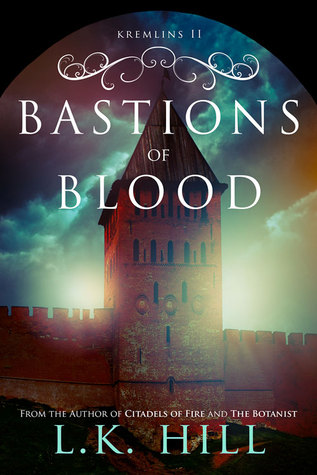 The second question I'm being asked a lot is when book 2, Bastions of Blood, will be released. Unfortuately, I don't know yet. I'm in a bit of a hurry-up-and-wait situation with book 2. The publisher that was supposed to release it nearly went under a few months ago. They were bought out by another imprint who decided not to publish book 2. So I'm in the process of copyright-reversion for BoB. It's all cued up and ready for release, but not all of the legalities are squared away yet, and obviously those have to be honored.
I'm hoping it will all work itself out in the next month or so. I'll announce the release date as soon as I know what it is. Promise. I can't wait for everyone to read part 2 of Taras and Inga's saga.
(Book 1 available through Amazon, B&N and most other major retailers.)
What are your views on historical accuracy in historical fiction?
It's a great question! Unfortunately, there's not a cut and dried answer. There aren't any rules that apply across the board. As I mentioned in my IWSG post last week, any rules are really just guidelines. It's up to the author and what they're trying to accomplish. Let me illustrate:
For most historical eras (and the farther back you go, the more this is true) we don't have many specific records for specific people. There are, of course, the infamous "annals of history" but they often leave things out, and are usually written by the victors of any conflict, which can make them very one-sided. In many cases, we living in this modern era can look at the entire picture and draw more objective conclusions than what the victors of the time would have had us believe. Still, that's not always done and sometimes it's not always even possible.
But certainly before the information age we didn't have websites detailing the reigns kings and queens, or the personal blogs of peasants and knights. (Wouldn't that be cool?!) We're lucky when bits and pieces of journals or other personal effects survive into our age.
So this is where our fiction skills come into play. And I use the word "skills" because a lot of insight must be used here. In my opinion, a good historical fiction writer doesn't just force historical figures or events into their story. Of course character and story need always come first in great fiction, but to change historical events to fit your story strays into the alternate history genre. And that's totally fine if that's what you write, but it's not, in my opinion, exactly the same as historical fiction.
(And yes, I'm being very nit-picky here. These are nuances. Most people--most readers, in fact--would just say, "who cares? History is history is history." But a writer has to take these things into account.)
So that's why I take the angle I do on historical fiction. I do everything in my power not to change any actual historical events to fit my story. I have been known to mess with the timeline a bit, but what year it happened in, in my opinion, isn't nearly as essential as what actually went down. (Of course that's just one writer's opinion. I'm sure there are some who would take the opposite angle and would have valid reasons for it.)
.JPG) |
| Source |
With a few well-documented exceptions, we have little in the way of exact conversations--much less internal thoughts--of historical figures. So this is where things get fun and creative. What was the character's reasoning for their decisions? What thoughts and feelings would have led the to that reasoning? Especially when we're talking the decisions of kings, queens, and generals that often led to war, death, and devastation.
So for my Kremlins trilogy, which is based on the reign of Ivan the Terrible, we have plenty of records of what happened, what Ivan did, and what the results were. But the real fascination for me is exploring his psyche and what made him the way he was. Although more harsh than most of us are, Ivan was a relatively decent man in his young adult years. But he slid into utter madness after his wife's death, and an entire nation suffered for it.
That said, I always include a historical note so the reader knows what, if anything, I've changed for the story. I think it's the duty of histfic writers to make sure readers get an accurate view of history. Histfic readers are phenomenally intelligent. They get that histfic will have make some non-historical changes. Most I've talked to tell me that, when enthralled with a historical era they've read about, they immediately jump online and read up on the facts themselves, so it's not a huge problem. But at the same time, I would never want to mislead anyone as to what actually happened in history. So as long as you make clear to the reader what compromises you've made to serve your story, and you're being as true to the history as you know how, I think the reader will go with you and simply enjoy your book.
I'm hoping it will all work itself out in the next month or so. I'll announce the release date as soon as I know what it is. Promise. I can't wait for everyone to read part 2 of Taras and Inga's saga.
(Book 1 available through Amazon, B&N and most other major retailers.)
What are your views on historical accuracy in historical fiction?

.JPG)
Monday, October 20, 2014
Famous Faces Before They Were Famous
Check out these famous faces before they were famous! See if you can guess who these people are or who they became!
A. Who is the little boy in this picture? Hint: Look at the eyes and think, "Engage!"


A. Who is the little boy in this picture? Hint: Look at the eyes and think, "Engage!"
B. Who will this young student become? Hint: Oh, the places he'll go!
C. Who's this pretty young guy? Hint: What do searchers, shootists, cowboys, roosters, and green berets all have in common?
D. Who does this adorable cutie grow up to be? Hint: White House.
E. What Scottish icon will this little charmer become? Hint: 00 and 7.
F. What uber-successful American icon will this little princess with the dazzling smile become?
Leave your guesses in the comments. I'll put up answers tomorrow. The first person to get all six right will get a prize. You can choose between a book for some swag. Good luck!
What are your guesses?
Monday, May 26, 2014
Memorial Day's Historic Origins
We cherish too, the Poppy red
That grows on fields where valor led,
It seems to signal to the skies
That blood of heroes never dies.--Moina Michael

Did you know...
That Memorial Day has it's origins in the Civil War?
It's true. More than 360,000 Union soldiers were killed during the war, and that added to the Confederate casualty count of 240,000. Half a million Americans died during this terrible time, so that all Americans could live free.
Monday, July 29, 2013
Portrait of a Adolf Hitler: 9 Way s to Make Your Villains More Unbalanced (and Creepier!)
 |
| Source |
A while ago, I was looking for information on Hilter's "carpet chewing" fits and came across a document about Hitler's temperament, based on reports of people who knew and worked with him. (All quotes from this source.) There are some really interesting aspects of his personality. None of them are at all admirable, but I think they could be great things to incorporate into a villain's character sketch.
1. Not forward-thinking or hard working.
"He is unable to maintain any kind of a working schedule...In later years the hours tended to get later and it was unusual, just before the war, for him to go to bed before daybreak. The night, however, was not spent in working as his propaganda agents allege, but in viewing one or two feature movies, endless newsreels, listening to music, entertaining film stars or just sitting around chatting with his staff."
2. Afraid of the dark.
1. Not forward-thinking or hard working.
"He is unable to maintain any kind of a working schedule...In later years the hours tended to get later and it was unusual, just before the war, for him to go to bed before daybreak. The night, however, was not spent in working as his propaganda agents allege, but in viewing one or two feature movies, endless newsreels, listening to music, entertaining film stars or just sitting around chatting with his staff."
2. Afraid of the dark.
Wednesday, July 3, 2013
Review: Insurgent +The Origin of Taps
So this is the week we will celebrate the birth of our country and the glory it has been since its inception. I come from a very patriotic family. My great-grandfathers on both sides fought on World War II and I have had lots of family in the military since then as well. So, in celebration, many of my posts this week will have a patriotic bent, and I may start out each one with a true story about the patriots in my family, or just a patriotic story in general.
 |
| Source |
Monday, May 27, 2013
Memorial Day Stories

My grandfather's on both sides of the family fought in World War II. There are countless stories about them, but I thought I'd just recount a few.
My great-grandpa Conger (on my mom's side) was a forward artillery scout. What that meant was that he would reconnoiter behind enemy lines prior to a battle to search for where the enemy's artillery would be. Then he would report back to his superiors so that, when the battle began, they would know where the enemy fire would be originating from. This was a very dangerous job and many such scouts never returned. My grandfather performed this duty in the darkness before dawn on D-Day. Not only did he make it back, but he stormed the beaches with the other marines and survived that too.
Wednesday, June 6, 2012
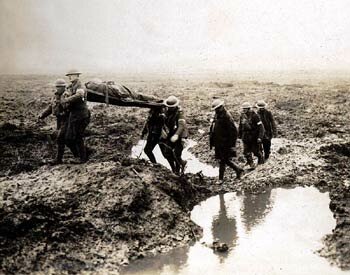
The Dead Marshes and World War I
Did you know...?
That J.R.R. Tolkien's inspiration for the locale of the Dead Marshes Same and Frodo pass through is routed in history, both his personal history and the world's?
Tolkien lived through both world wars, though by the second one me was an old man. During the first, however, he was young and served in the army for his country.
If you know anything about WWI, you know how messy it was. The military strategy hadn't caught up to the technology, with the result that hundreds--perhaps thousands--of young men were needlessly killed. For years, warfare had consisted of digging trenches for cover, and running out of them for attacks. The problem was, WWI was the first major war that made use of things like machine guns and mustard gas. Given these weapons, the trench strategy was ludicrous! There was no advantage to it whatsoever and men on both sides were cut down without a prayer of life or victory. Many harsh lessons were learned during this war. It's one that even today fascinates and inspires because of the epic tragedy it engendered.
On the psychological side, things were even sadder. While war always does a number on soldiers, this one was particularly nasty for them. Not because it was any gorier than later wars, but because the soldiers were not prepared psychologically for what they would experience. I don't think anyone ever can be, but in our case today, we know what's out there. We have movies, the internet, the news, video games, books, etc that prepare us--at least somewhat--for what we might be facing should we choose to go to war. That was not so with these boys. Most of them were very honorable and went to war because they were loyal and nationalistic and wanted to fight for their country. It wasn't so much that those attitudes changed, but that they were utterly ignorant of what it would be like on the war front.
Enter a young J.R.R. Though it's hard to say what he felt about his experiences in WWI, what we know is that he made it out and lived a long, respectful life. Though he didn't know it in his lifetime, he wrote what would become one of the most famous, inspirational fantasy epics ever penned.
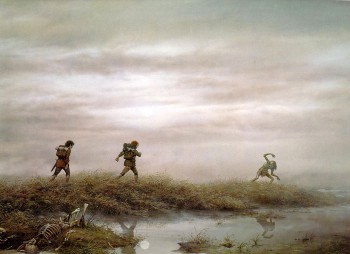
" 'They lie in all the pools, pale faces, deep deep under teh dark water. I saw them: grim faces and evil, noble faces and sad. Many faces proud and fair, and wees in their silver hair. But all foul, all rotting, all dead...'
'Yes, yes,' said Gollum. 'All dead, all rotton. Elves and Men and Orcs. The Dead Marshes. There was a great battle long ago...Tall men with long swords, and terrible Elves and Orcses shrieking. They fought on the plain for days and months at the Black Gates. But the Marshes have grown since then, swallowing up the graves; always creeping, creeping...You cannot reach them, you cannot touch them...Only shapes to see, perhaps, not to touch. No Precious! All dead.' "
What do you think?
Subscribe to:
Posts
(
Atom
)