
Author Liesel K. Hill's Musings on Fantasia...
Monday, August 27, 2012
Five Things You Probably Don't Know About Dystopian Literature

Not many people outside the writing/publishing industry have the word dystopia in their working vocabulary (understand that I include those who write films). Yet, the more I learn about dystopian stories and their psychological effect on our modern society, the more important I realize they are. I've thought about this a lot lately but then I read a column by Steven Kalas that really got me thinking about it.
Here are the conclusions I've drawn (so far) and that I think everyone should be aware of concerning dystopian stories of any kind:
1) The definition: a dystopia is a society characterized by human misery (i.e. squalor, oppression, disease, overcrowding, etc.) see source


3) Depending on how you mold the definition to fit whatever aspect you are addressing, any story, specifically any conflict, can be characterized as a dystopia. Now don't get me wrong: if we're talking about a man vs. himself kind of conflict that has nothing to do with society, and you try to categorize that as a dystopia, lots of people in the industry will shake their heads in your general direction. But, if a character's main conflict is within himself, then his "society" is what's inside his own head. If he's miserable in some way, then your story is dystopic. (Kafka would be an expert at this. As much as I hated The Metamorphasis, it IS actually relevant here.) I don't say this to confuse the genre issue, but only to point out that dystopias are simply conflicts on a societal level. They deal with how the individual reacts to a society-level problem, but more on this in a minute.


While I totally get that society is fast going into the toilet, I think it's important to point something out: we create these dystopian stories and the public eats them up, whether in book form or on the big screen, because we hunger for answers. Maybe we all do know that society won't be a utopia in the long run, so we crave these stories so that we can define ourselves in the face of what we believe society will become and keep ourselves from slipping into anarchy.
Granted, there were plenty of people prior to WWII that knew if the Nazis came to power, it would be a bad thing, and Hitler still made it to the top. But if some Joker-esque character showed up in NYC tomorrow, how many Americans would stand by idly and watch, much less follow him blindly? In my mind, not many. For us, it's a been-there-done-that situation, even if it was just in a film. My point, well it brings me to the fifth thing you should know about dystopias;
5) Dystopias help us work out our psychological issues. They become an outlet for how the individual reacts to society's problems. We watch them and we resolve within ourselves that we would be the one that was different; that we would stand up to the oppression (Christopher Nolan's Batman series) , find a way to feed our families (Hunger Games), keep the ones we love alive (every zombie move EVER!) or just all-out save the human race (I am Legend).
My point is that the entire reason we create dystopian art in any form is to keep it from happening in real life. It's the ultimate example of why we love to read stories about human beings in the midst of conflict: we want to educate ourselves, decide how we would react in that or a similar situation, and make ourselves better/stronger by it. If we can address our society's flaws and show why we must keep them at bay, we will be able to keep our society sane and ordered for that much longer. Hence, audiences drink up dystopian stories like people dying of thirst. After all, we can see aspects of society crumbling around us daily. So we read books and watch films about individuals banding together to reclaim their society and triumphing over all that is wrong with the world. Then we go back to our lives feeling a little stronger, a little more able to deal with our own problems.

Persistence of Vision
Winter 2012

Saturday, August 25, 2012
August is Awesome! Strands of Pattern
Hi there everyone! Just a quick note. Today (Saturday 8/25) Strands of Pattern by Jeff Hargett is featuring a guest post that I wrote about relevance in characterization. Hop over there and check it out if you have a chance. Jeff has had TONZ of great guest posts this month all about different aspects of the writing process. Check a few of them out too. Bet you'll learn something! :D Have a great weekend everyone!
http://strandsofpattern.blogspot.com/2012/08/august-is-awesome-because-of-liesel-hill.html
http://strandsofpattern.blogspot.com/2012/08/august-is-awesome-because-of-liesel-hill.html
Thursday, August 23, 2012
Follow Friday--Horrible Covers

Gain new followers and make new friends with the Book Blogger Feature & Follow! If this is your first time here, welcome! You are about to make some new friends and gain new followers -- but you have to know -- the point of this hop is to follow other bloggers also. I follow you, you follow me.
The Feature & Follow is hosted by TWO hosts, Parajunkee of Parajunkee's View and Alison of Alison Can Read. Each host will have their own Feature Blog and this way it'll allow us to show off more new blogs!
How does this work? First you leave your name here on this post, (using the linky tools -- keep scrolling!) then you create a post on your own blog that links back to this post (easiest way is to just grab the code under the #FF picture and put it in your post) and then you visit as many blogs as you can and tell them "hi" in their comments (on the post that has the #FF image). You follow them, they follow you. Win. Win. Just make sure to follow back if someone follows you!
Go to Alison Can Read for the Featured Blogger!
Q: Worst cover? What is the worst cover of a book that you've read and loved?
Okay, even though I love, love, LOVE the story, the original Song of Fire and Ice covers (below) aren't my favorite. They're simply too generic. This series has kings, queens, kingdoms, knights, tournaments, battles, romance, death, incest, dragons, monsters, and so much more! There are so many awesome characters and great story lines and epic conflicts but the covers feature...a chalice, a crown, or a sword against a solid background? Really?

Love the story, not so much the covers. Would still highly recommend the books, though! :D
How about you?
Thoughts for Thursday (2)

So, onto our meme!
Welcome to Thoughts for Thursday!
Thoughts for Thursday is a new meme hosted by Musings on Fantasia and LKHill. . In this meme, we share thoughts or quotes that we know or have recently come across. Each week there is a specific subject or theme. These can be quotes from books, quotes by famous people, (quotes by YOU, perhaps ;D). Anything from anywhere is game, though we do ask that you keep your quote to a few sentences at most. Don't quote, for example, entire passages of a book or essay. These can be funny quips, cool sayings, hair-raising antidotes, movie lines, any kind of quote you can think of!
Readers may respond by either commenting on the quote I put forward or contributing a quote of their own. I'll include a linky list, or you can just respond in the comments.
Just have fun, collect awesome sayings by awesome people, and try to be inspired!
This week's theme is the sea. I'm collecting mermaid novels for my TBR, so I thought it would be appropriate. If anyone has any suggestions, I'd love to hear them!

"The sea has never been a friend to man. At most, it has been the accomplice of human restlessness."
--Joseph Conrad
What do you think Conrad meant? How can we apply this to our stories and/or characters? What does it make you think of? Does anyone have any other cool quotes about the sea/ocean to share?
Wednesday, August 22, 2012
Best Villains of All Time--Part 2
"Villainy that is vigilant will be an overmatch for virtue, if she slumber at her post."--Charles Caleb Colton
Hello everyone! So last week I did a post called Best Villains of All Time. Here, I'm doing part 2 of my villains series.
Today, we'll be talking about secondary villains and next week we'll address comedic villains. (My terms. You won't find them on wikipedia.)
A secondary villain, by my definition, is a villain that follows the primary villain around. In other words, storm troopers (star wars), orcs and goblins (LOTR), and various monsters and villains in other stories. Basically, secondary villains are the grunt guys or sidekicks to the main villain.
While your primary baddies need to be almost, if not entirely as well rounded as your heroes, your secondary villains really shouldn't be. In fact, you should make them pretty flat. By all means make them evil, intimidating, etc., but if you go into a back story with them, it will take away from your primary villain.

So, make your secondary villains one-sided. In my story, Persistence of Vision, due out the end of this year, I have two types of secondary villains. They're called Arachnimen (so named for the spider's web tattoo on their face) and Trepids. They're more or less the same thing except that Trepids are higher in the hierarchy of evil.
These guys are basically just big stupid brutes. They take orders from the collectives and go around doing the rape, pillage and plunder thing. They rarely make their own decisions, and aren't at all independent. I do have main bad guy which the reader is only briefly introduced to in Book 1, but it's enough to know that, while the Arachnimen and Trepids are capable of doing some damage, they aren't the real threat. And they're definitely not the brains of the operation.
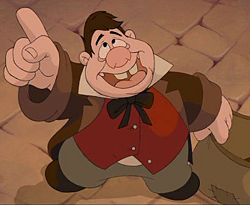
As long as you have a well-rounded primary villain to pit against your hero/heroine, secondary villains, while not great characters themselves, can definitely be an asset to your story! Try one out sometime! :D
Random Movie Quotes
Don't know what this is? Click here.

The film is called The Neverending Story. The line (very tragic) was said by Rock Biter. Both of these were guessed first by The Housework Can Wait. So two points there! Great job! No one guessed the name of the actor that played him. His name was Alan Oppenheimer and he also did voices for Falcor, G'mork, and the Narrator. (Just a bit of totally useless trivia for you! :D) Thanks to everyone who participated! Great job!
Now, onto today's RMQ!
"There are no happy endings, because nothing ends."
Again, three points possible. One for the name of the film, one for the name of character who says the line, and one for the name of the actor. Good luck! :D
Monday, August 20, 2012
Top Ten Tuesday--Favorite Books--and RMQ

Here's Top Ten Tuesday! RMQ is below!
Top Ten Tuesday is an original feature/weekly meme created here at The Broke and the Bookish. This feature was created because we are particularly fond of lists here at The Broke and the Bookish. We'd love to share our lists with other bookish folks and would LOVE to see your top ten lists!
Top Ten Tuesday is an original feature/weekly meme created here at The Broke and the Bookish. This feature was created because we are particularly fond of lists here at The Broke and the Bookish. We'd love to share our lists with other bookish folks and would LOVE to see your top ten lists!
Each week we will post a new Top Ten list that one of our bloggers here at The Broke and the Bookish will answer. Everyone is welcome to join. All we ask is that you link back to The Broke and the Bookish on your own Top Ten Tuesday post AND add your name to the Linky widget so that everyone can check out other bloggers lists! If you don't have a blog, just post your answers as a comment. Have fun with it! It's a fun way to get to know your fellow bloggers.
Top Ten Favorite Books You've Read During The Lifespan Of Your Blog
To be honest, I don't get a lot of time for reading these days so I only read two or three books a month and I've only been blogging since May, so I've only read eight books in that time. Oh well. Here they are:
8) Anna Karenina by Leo Tolstoy (Still reading this but started it about the time I started blogging and hope to finish in the next month or so.)
7) Les Miserables by Victor Hugo (Same thing applies for this as for AK. This book is awesome, but LONG.)
6) In Praise of Motherhood by Phil Jourdan
5) Possession by Elana Johnson
4) Sleepwalkers by Paul Grossman (just finished this one)
3) Pushing the Limits by Katie McGarry (technically still reading because participating in read-along)
2) A Dance with Dragons (Fabulous Series)
1) Grave Mercy (Totally awesome!)
What can I say? Fantasy just tends to win out with me. :D What are your top ten books?
Random Movie Quotes
Don't know what this is? Click here.
So I totally forgot to add RMQs to my blogs the last part of last week. This is really the first one. :D (Yea!) Today's RMQ is from a very old children's movie:
"They look like good strong hands, don't they? I always thought that's what they were. The little man with his racing snail, the night hog, even the stupid bat. I couldn't hold on to them. The Nothing took them right out of my hands..."
What do you think? Any guesses? Three possible points here. One for the film, one for the character, one for the actor who played him (actually just his voice) though I'd be very impressed if anyone knew the name of the actor off the top of their head. It's just very obscure. Good luck!
Five Reasons You WANT to Be Drugged in Vegas
1) Despite a year of agony, trying to figure out what went wrong and what happened to you during your lost time, a year later a hot guy may show up to tell you he's from the future and that he desperately needs your help.
2) You'll get to Travel through time and get a glimpse of the earth's future.
3) You'll get to learn the history of things to come and meet a team of individuals who are fighting for the freedom of humanity.
4) The team will teach you how to use your super-brain powers, including unparalleled Offensive energy.
5) You may fall in love with the brooding, serious team Healer, who remembers you and knows you personally, though you don't remember him at all. (Okay, maybe that would be less than pleasant, but still...)
Yeah, you definitely want to get drugged in Vegas...
Persistence of Vision--Slated for release winter 2012.
2) You'll get to Travel through time and get a glimpse of the earth's future.
3) You'll get to learn the history of things to come and meet a team of individuals who are fighting for the freedom of humanity.
4) The team will teach you how to use your super-brain powers, including unparalleled Offensive energy.
5) You may fall in love with the brooding, serious team Healer, who remembers you and knows you personally, though you don't remember him at all. (Okay, maybe that would be less than pleasant, but still...)
 |
| Stand out or fade away... |
Persistence of Vision--Slated for release winter 2012.
Subscribe to:
Posts
(
Atom
)