
Author Liesel K. Hill's Musings on Fantasia...
Showing posts with label Dystopias. Show all posts
Showing posts with label Dystopias. Show all posts
Wednesday, October 7, 2015
Movie Review: Air
 |
| Source |
*FYI: Even though I talking about the ending in terms of whether it was fitting or not, I really do stay largely away from spoilers*
I'll admit the main reason I wanted to see this (other than the dystopian genres) was because of the actors. I really love both these guys and thought they did an excellent job. But I fully recognized that awesome actors can still do B movies, so I figured there was a good chance that it wouldn't be the awesomest film ever.
But actually, I REALLY liked this. Way more than I thought I would.
Plot: So basically something happened that brought the world to an end (typical post-apocalyptic stuff) and the surface is no longer able to sustain life. Somehow, society managed to save a handful of people. The ones they picked are the kinds of people who will be able to rebuild the world when it's inhabitable again. So scientists, botanists, etc. But they're all in these sleeping chambers. The two main characters, Bauer (Norman Reedus) and Cartwright (Djimon Hounsou) are just techs. They wake up ever six months, check on everything, make sure it's all working right, then go back to sleep for another six months. They only have two hours of air to get everything done before the system shuts down to conserve oxygen and they go back to sleep. This cycle will continue until the world is inhabitable again. But this time, things start to go wrong.
Characters: For such a short window to develop the characters, I thought they did an excellent job. We saw how they were casually with one another, how they were under stress. We saw their flaws, their pretenses, and their dichotomies. Cartwright (Djimon Hounsou) was the more solemn, thoughtful one, but he's keeping secrets. Bauer (Norman Reedus) was way more non-chalant about things, as though he didn't really care one way or the other what's going on (I think he only calls Cartwright by his name once. The rest of the time he just addresses him as 'Buddy.') but we quickly learn that he values loyalty, but also has a disloyal past that haunts him. Just really well-rounded characters for a story like this. I was really impressed. Even though one is obviously meant to be more the hero, and the other more the antagonist, I really couldn't love or hate either one of them. They were just so very human.
 |
| Dystopian screen cap from movie. |
Another thing I thought was interesting was that aging didn't seem to be a problem. At one point Cartwright talks about how it might take as little as 30 cycles for the earth to become inhabitable again, or as many as one hundred. They don't address the aging directly, but neither of them seems to be worried that they'll die before the hundred cycles are up. So I guess whatever gaseous substance they're using to put themselves to sleep must also slow down or stop the aging process. Obviously these two guys age a couple of hours each time they wake up, but that's it. The "Sleepers" as the other survivors are called, don't seem to age at all. Just kind of an interesting element to the story.
Ending: There's definitely some tragedy here, but that's typical of dystopians. Overall, I really liked the ending. I thought it was fitting for the characters, and it didn't leave me feeling like there should have been more.
Here's the thing: there are two kinds of dystopian stories out there: the kind that focus on how the best of the human spirit comes into play in extreme circumstances, and the kind with more of a Lord of the Flies bent where the worst parts of human beings come out in those same circumstances. I really don't like the latter stories. I'm always disappointed in them. And don't get me wrong, even the ones that focus on hope usually have a few characters that go to the darkest parts of their psyches and stay there, but I prefer to focus on the hope for the main characters.
This film was interesting because it was definitely a mixture of the two. Both these guys were decent and doing the best they could, but they still had some deep trust issues. And yet, those trust issues weren't unwarranted. I didn't find it to be unrealistic or unnecessarily dark. And overall, it definitely ended with hope, which made me like it. Thumbs up for the ending, even if there was some sadness to it.
Overall: Well it's a small sort of story, but still deep and thought-provoking. Don't go into it thinking it's gonna change your life or anything, but as I said, I liked it WAY more than I thought I would. I'd totally watch it again. :D
Has anyone else seen Air? Did you like it?

Monday, December 15, 2014
Writing Prompt: Dystopian Christmas
It's been a while since I've done a dystopian post, and I was trying to think if there was any way to combine the themes of dystopia and Christmas. I didn't come up with much, but I thought it would make a good writing prompt.
How could you combine the themes of dystopian and Christmas?
I thought maybe you could do a story where your dystopia actually revolved around Christmas. Or the lack thereof. So maybe it could be a world where Christmas means something completely different than it does to us. Maybe people are expected to give gifts, but there was a steep human cost for the giving of these gifts.
It would be interesting if the idea of Christmas actually struck fear into people's hearts.
I don't know. Just hashing out ideas.
Or, you could go this route:


(Source, left pic. Source, right pic.)
That could be interesting as well.
What do you think? How would you write a story that combined the themes of Christmas and dystopia?
How could you combine the themes of dystopian and Christmas?
I thought maybe you could do a story where your dystopia actually revolved around Christmas. Or the lack thereof. So maybe it could be a world where Christmas means something completely different than it does to us. Maybe people are expected to give gifts, but there was a steep human cost for the giving of these gifts.
It would be interesting if the idea of Christmas actually struck fear into people's hearts.
I don't know. Just hashing out ideas.
Or, you could go this route:
(Source, left pic. Source, right pic.)
That could be interesting as well.
What do you think? How would you write a story that combined the themes of Christmas and dystopia?
Monday, July 21, 2014
Three Core Beliefs Dystopian Stories Demonstrate in the Human Race
 |
| Source |
I've done posts before about why the dystopian genre is so prevalent today. This was brought up for me again recently when I watched (or re-watched, rather) The Walking Dead series with my mom. After a particularly dark, disturbing episode, she commented about how many movies/TV shows/books deal with the end of the world, and why that is. I told her I thought that we, as a society, were trying to prepare ourselves. She agreed, but wondered why.
Will our society eventually degrade into a post-apocalyptic dystopia? I think it's a definite possibility, if we keep doing the way we currently are, but why is that? Well, let's use a couple of lines from a Schwarzenegger film.
| Source |
"We're not gonna make it, are we? People, I mean."
"It's in your nature to destroy yourselves."
"Yeah, major drag."
(Anyone know that film?)
Anyway, my point is that, even if our society doesn't ever hit the point of The Hunger Games, Cormac McCarthy's The Road, or The Walking Dead, (we'd need zombies for that) I still think we are trying to warn and prepare ourselves for the worst. We know it's in our nature. And we see the degradation of our society all around us. Even if it's just on an unconscious level (and I'd argue it's not so unconscious) we are trying to tell ourselves something: That the making of a dystopia is all around us.
The problem is that most of us don't know what to do about it. Our world is fast becoming a global society, which isn't bad in and of itself. But the second it starts to go off the rails, it's just too big and daunting an animal to tame. No one knows where to start.
 |
| Source |
1) That things aren't as bad yet as they could become
2) That we have to hit rock bottom before we can rebound (most dystopian stories start at rock bottom, after all)
3) That once we get to the bottom, we'll have no place to go but up
This shows that, at our core, most human beings are logical, level-headed, determined, and retain their hope that we will always be able to rebound from anything we get ourselves into.
And that gives me hope in our future. No matter how dark the dystopian story-telling gets. :D
Why do you think we're telling so many dystopian stories these days?
Monday, May 19, 2014
Finding New Perspectives on Dystopia
 |
| Source |
"The green light of the oppressor's boot
Bend your neck to the chopping block..."
Just with that much, he told us to throw out titles for the poem. Naturally people came up with words like "Slavery," "Fascism," "Revolution," "Freedom," and plenty of other negatively-charged political words. Then the professor posed a question.
"What if the title was..."Romance?" Or "Unconditional Love?"
Monday, October 14, 2013
Powers of the Mind and Post-Apocalyptic Worlds: Welcome to Interchron
 |
| Source |
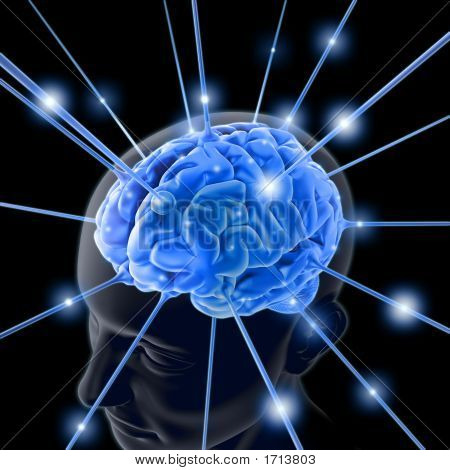
For those who haven't read them, I thought I'd go over the back story of the world they're set in. The world of Interchron is a futuristic, post-apocalyptic one, where society has devoured itself alive with wide-open eyes. Some years in our future, a scientist known only as Smith succeeds in mapping the human brain in it's entirety. What he discovers is that every decision we make as humans, every attribute we take on, everything we observe in any way that influences us, that changes us or otherwise defines us, shows up in our brain chemistry.
 |
| Source |
As people begin to explore and manipulate their brains using these new discoveries, they find ways to develop super-brain powers. Most are mental powers that manipulate neurochemical energy and boost the quality of life. They include things like Healing, Protection through mental shields, and in some rare cases, Time Travel...
Monday, August 5, 2013
How to Lose a Free Society in Record Time
 |
| Source |
What does this say about our society?
On the one hand, I'd like to say that it means people have a certain amount of hope. They get excited about a big prize and there's nothing wrong with that. At least on the surface. (As someone who's much more likely to enter a giveaway for a $50+ giftcard than for a $10 one, I understand this concept first hand.)
There is one major difference between a giftcard giveaway and $400 million jackpot. And it both is and isn't the amount.
Monday, July 22, 2013
The Surefire Way to Recognize "Real" Dystopia Amist the Sea of Wannabes
 |
| Source |
I got to thinking about pioneers and characters, pioneers in stories, etc., and I realized something: Pioneers are a HUGE part of the dystopian genre! It just never occurred to me in those terms before.
Pioneer:
1. A person who is among those who first enter or settle a region, thus opening it for occupation and development by others.
2. One who is first or among the earliest in any field of inquiry, enterprise, or progress.
3. An organism that successfully establishes itself in a barren area... (Source for definitions.)
Monday, July 15, 2013
George Zimmerman Trial--Sign of the Apocalypse? You Decide.
 |
| Source |
Originally, I was going to write about how this sensationalized trial might be indicative of how our society is headed toward dystopia.
There are a lot of polarizing elements to this case. Whether or not you believe Zimmerman should have been brought to trial, the fact remains that he wouldn't have been, based on what happened, if a liberal in sheep's clothing hadn't cried racist. This was a textbook case of self-defense and the fact that charges were even filed is farcical.
 |
| Source |
Let's talk about dystopian literature for a minute. What is the one common thread that runs through every dystopian story, tying it together as a genre? It's the presence of a government, state, or entity that denies basic freedoms to its citizens.
Most of us can define basic freedoms fairly easily, but I'd like to point something out.
 |
| Source |
"And for the support of this Declaration, with a firm reliance on the protection of Divine Providence, we mutually pledge to each other our Lives, our Fortunes, and our sacred Honor."
In the Constitution, they state that all men have unalienable, god-given rights including life, liberty, and the pursuit of happiness.
In Joseph Conrad's immortal Heart of Darkness, he goes into a discussion about how dispassionate apathy is. He makes the point--in a roundabout way--that fighting to live is the most passionate act we as human beings can be part of. Without passion, we wouldn't care enough to fight, but all of us fight back when we are attacked, don't we?
Seeing a pattern here? Fighting for the right to live, to keep breathing, is our first and most basic right. It's an act that makes us human; that makes us free. It's also the act that Zimmerman was put on trial for.
I'm sorry for the doomsday feel of this post. Originally it was going to be all kinds of gloomy as I illustrated the ways in which this case shows how quickly we're heading for dystopia. But then, just as I was preparing to write it on Saturday night, the verdict came back: Not guilty on all counts.
While I am EXTREMELY happy on Zimmerman's behalf, it did kind of take the wind out of my post.
Now, I am well aware that plenty of people will disagree with me about this trial. It's a very polarizing issue and that's okay. I respect every person's right to their own opinions. But the fact remains that Zimmerman killed another man defending himself, and was put on trial and dragged through the mud for it. That's terrifying to me. If we cannot take a stance in defense of our own lives, how can we defend our families or our other freedoms?
 |
| Source |
Perhaps we ought to consider the possibility that dystopia may consist as much of ethical things being punished as it will of unethical things being allowed.
The tagline of my dystopian series is: Stand out or fade away... This case is an awesome example of encouraging fear, silence and non-action, and the only thing that can lead to is mediocrity. These are not the principles America--or any freedom, for that matter--was founded on.
The tagline of my dystopian series is: Stand out or fade away... This case is an awesome example of encouraging fear, silence and non-action, and the only thing that can lead to is mediocrity. These are not the principles America--or any freedom, for that matter--was founded on.
Thank goodness our justice system is still functioning at it's core, even if it did take a while to get there. Maybe we're not standing over the chasm of dystopia quite yet.
What are your feelings about the Zimmerman verdict?
(I fully realize that this is a potentially divisive and polarizing post, and that many people may disagree with what I've said. Please feel free to leave your feelings here, even they are in opposition to mine. I will not discriminate against you for your opinions. I may disagree with you, but I believe in fighting like hell for our god-given rights, including freedom of speech.)

In a world where collective hives are enslaving the population and individuals have been hunted to the verge of extinction, Maggie Harper, and independent 21st Century woman, must find the strength to preserve the freedom of the future, but without the aid of her memories.
After experiencing a traumatic time loss, Maggie is plagued by a barrage of images she can't explain. When she's attacked by a creep with a spider's web tattoo, she is saved by Marcus, a man she's never met, but somehow remembers. He tells her that both he and her creepy attacker are from a future in which individuals are being murdered by collectives, and Marcus is part of the rebellion. The collectives have acquired time travel and they plan to enslave the human race throughout all of history. The flashes Maggie has been seeing are echoes of lost memories, and the information buried deep within them is instrumental in defeating the collective hives.
In order to preserve the individuality of mankind, Maggie must try to re-discover stolen memories, re-kindle friendships she has no recollection of, and wade through her feelings for the mysterious Marcus, all while dodging the tattooed assassins the collectives keep sending her way.
If Maggie can't fill the holes in her memory and find the answers to stop the collectives, the world both in her time and in all ages past and future will be doomed to enslavement in the grey, mediocre collectives. As the danger swirls around her and the collectives close in, Maggie realizes she must make a choice: stand out or fade away...
Monday, July 8, 2013
Why Dystopians Make Real Life Seem Boring
 |
| Source |
Meanwhile, I've given the manuscript to several beta readers, many of whom are family members. (My true beta readers are my critique group but I give it to the fam to make them feel important. :D)
My younger sister works in a doctor's office in the evenings and can't usually read at work. Whenever supervisors are there, they aren't allowed to get on their computers, but every once in a while she can. She asked me to send her a PDF of book 2 so she could read in her spare time. She read a few chapters, and then promptly forgot about it for several weeks. When she remembered, she started again and read it more quickly.
Monday, July 1, 2013
Stand Out or Fade Away: Patriotism in a Dystopian World
 |
| Source |
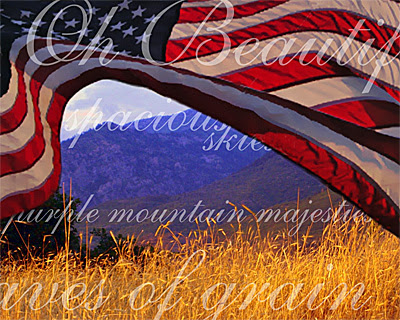
For today, I'll just integrate the story into the dystopian post.
Monday, June 24, 2013
Hell and Dystopia--Interchangeable Concepts?
 |
| Source |
Monday, June 17, 2013
Dystopia as a Glace Reflection
 |
| Dystopian Future? Source |
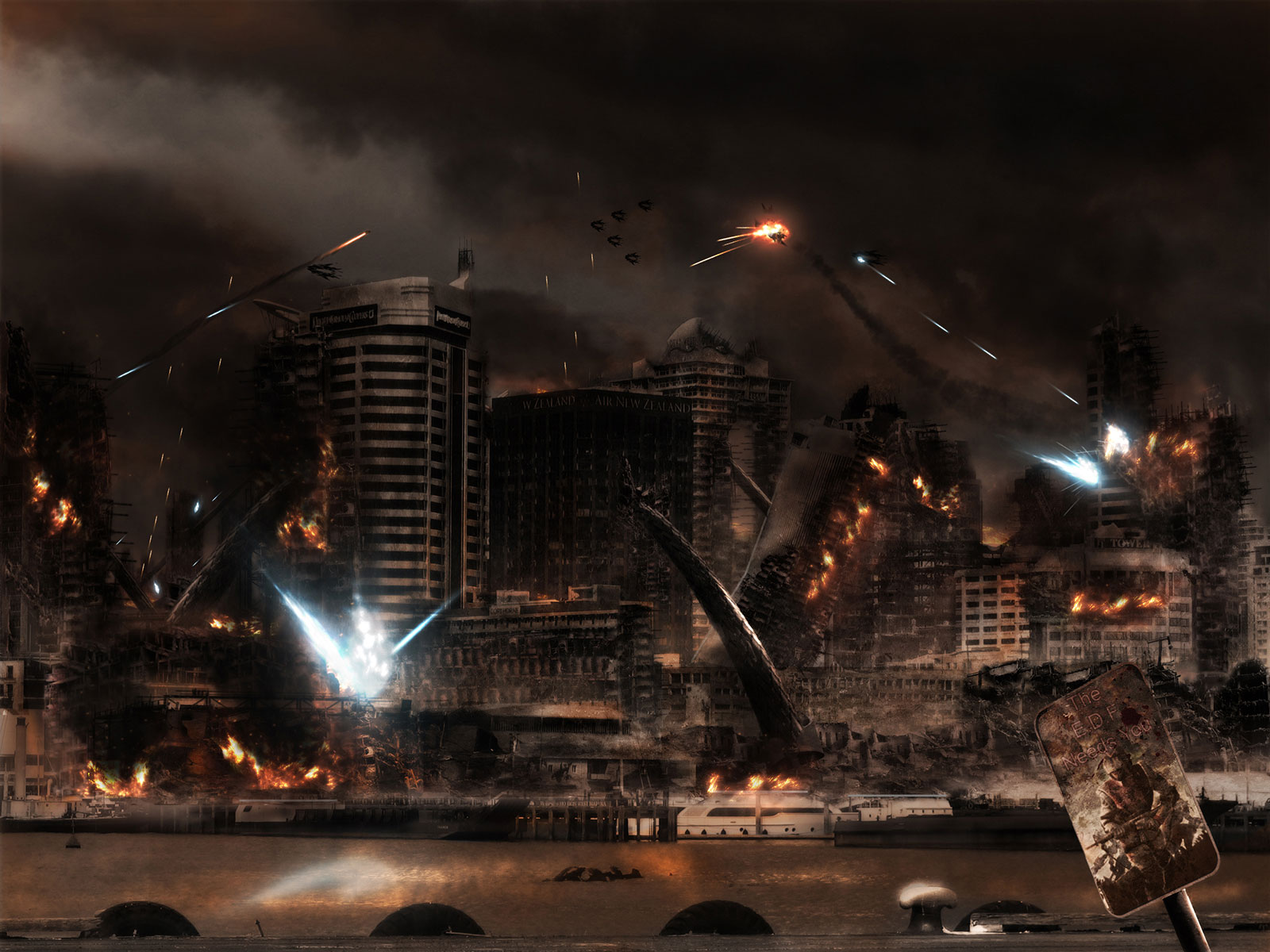
It occurs to me that this may be true of dystopias in general. Perhaps they help us see the unattractiveness of our own society, and how bad things might become if we let them.
After all, ours is a society where the intolerant preach absolute tolerance, where 90-pound movie stars preach loving one's body, no matter the size, and where headlines like "Eating Boogers May be Good for Your Health" actually make it into newspapers. (How long do you think we have before the gorillas get the better of us?)
Perhaps we are drawn to flawed societies in the same way we are drawn to flawed characters: because we identify with them; because we can get behind them and root for their victory; because they feel so real that we can't ignore them.
No one would argue that our society doesn't have problems. We all know tragedy exists in the world, but it's hard for us to do anything that feels really meaningful to help. We get overwhelmed just thinking about it. Taken to extremes, these problems will lead to our society's destruction, and we're all aware of that fact.
We humans are capable of great feats, but we are also prone to fall into idleness. Perhaps dystopias strike such a chord with us because they remind us of our society's own ugliness, which in turn spurs us on to try and live our lives to make things better. It's human psychology at its best. Or weirdest.
What do you think of this theory?
Persistence of Vision, Book 1 of Interchron available now from Amazon.
Monday, June 3, 2013
Dystopian Musings + Game of Thrones Recap
I've
talked about many things on this blog, including why human beings need stories,
and why dystopian literature is so popular. The two--not surprisingly--go hand
in hand.
 |
| My silly, two-year-old niece, Eve. |
I
live with my sister, who has a two-year-old daughter named Eve. Her financial
situation is a rough one. She makes ends meet, but there is often too much
month left at the end of the money. My sister is not the type to get herself
into a financial bind. (Quite the opposite, actually. She’s someone who's always in control of her life.) Unfortunately, her circumstances were not her choice.
Three
months after her daughter was born, her husband of two years simply decided
that he didn't want her anymore. He dropped her and his infant daughter off on
my dad's doorstep with hardly a glance backward. Now my sister is a single
mother, trying to provide for her child. She works a low-paying job during
hours that her daughter mostly sleeps so she can spend as many waking hours as
possible with her daughter. She could qualify for a higher-paying job, but it
would mean sacrificing time with Eve, which she's unwilling to do. The result
is that, until Eve is old enough to go to school (still a few years away) my
sister will simply not make much money.
These
situations are part of life, and my sister is one of my heroes. She never looks
behind. She can get frustrated with her situation at times, but she’s always
looking forward, with no regrets. It’s not her fault her ex is a douche bag. It’s
not my fault I haven’t found a sweet, good-looking, wealthy man to marry yet, who'll pay my bills for me. ;D We experience, we cope, we move forward
This
is why we need great literature. When we come across a hero or heroine that
isn't afraid to take their lives in their own hands, do what must be done and
save their world, we can't help but live vicariously through them. It empowers
us to deal with our own lives and gives us courage and hope.
It
always amazes me how “out there” people think these concepts are. If you start
talking about how humans need to feel empowered and find ways to take their
fate in their own hands, people look at you like you’re a dangerous animal.
They talk to you like you're mildly retarded and need to be coaxed gently
toward the psych ward.
I've
been called many things: a nerd, because I read so much; paranoid, because I
believe in being prepared; a bible thumper, because I have traditional
values.
I don’t consider
myself backward or superstitious (if I did, I probably wouldn’t be writing
dystopian novels for a living) but I’ve been accused of it. Most people aren’t
brazen enough to say such things to my face, but sometimes I wish they would,
just so I could try out some of the awesome comebacks I’ve come up with. (Curse
of the novelist to think about the most effective, memorable way to say
things.)
And if given the
chance, would I remain calm and collected, explain my beliefs in a polite,
non-confrontational way and bring them around to my way of thinking?
I’d like to answer
yes, but somehow I doubt it. I think my reply would be something more along the
lines of,
“And yea though I
walk through the valley of the shadow of death…I’ll have my bible, and my .380
auto. And I’ll be good to go.”
Hey, I never claimed
to be a diplomat.

So, here’s to doing
the things that make you feel empowered in your own life, no matter what anyone
else thinks, and no matter what the world throws at you, be it annoying
co-workers, a sluggish economy, a corrupt government, or a zombie apocalypse.
It’s my opinion
that, when dystopia descends upon our society for real, it will be the deep
thinkers, (read: the avid readers) that save the world. They won’t be Clark
Kent-types or Tony Starks or Thor (much as we’d like to drool over those guys
all day long). It will be the normal joes who save the world. The ones who have
children to raise, jobs to do, and selves to improve. People like my sister.
As for me, I prefer
to write characters who aren’t afraid to do what must be done, even as they
deal with the human fears we all share. (See sidebar for links.)
After all, what’s
the point of being a backward bible-thumper, if you can’t get a great dystopian
novel out of it?
Game of Thrones Recap
Ah episode 3.9. The one with the Red Wedding. This is the episode everyone has been waiting for and I thought they did an excellent job portraying it. For me, I always wanted a little more confrontational drama (even in the book) but they showed what did happen in the books very well. Remember, this recap will contain blatant spoilers, so read at your own risk!
| Source |
We open with Robb and Catelyn making war plans. Robb has finally (seemingly) forgiven his mother for letting Jaime Lannister go. With the fall of Winterfell after she warned him about trusting Theon, he finally sees the wisdom in seeking her council and does so. They bond over plans to annihilate the Lannisters. You gotta love family moments like these.
Meanwhile, Dany makes plans to sack the city and free the slaves. Her advisors--Mormont, Barristan, Dario, and Grey Worm don't entirely see eye to eye, but she gives her orders and sends them into the city. Long story short, it's a bloody fight, but eventually the city surrenders to the Mother of Dragons. And she makes calf-eyes at Dario. A lot. (Poor Mormont!)
Sam and Gilly reach the wall. We only get a few minutes of their conversation, but it's cute and Sam throws in his plan for getting back over the wall. One that may or may not cause him to cross paths with another character. Just sayin'.
| Source |
Meanwhile, the Hound takes Arya closer to the Frey's castle where he plans to sell her for ransom to her brother. I've talked before about how they make the Hound less fierce in the show than in the books, but especially this season I think they've done Arya a bit of a disservice. Part of it is that they cut so much of her travels with Gendry and Dondarrion's gang, which means cutting some key scenes for her. As a result, she seems much less spunky than usual. I miss her sharp tongue and scathing wit. It's not that she necessarily said more in the books, but because it was from her point of view, the reader understood more about her reactions. I was hoping they would verbalize it a bit more to bring those reactions across. But alas, they didn't. She and the Hound assault a perfectly innocent pig farmer and take his wagon, before heading toward Castle Frey. There's also a good bit where Arya talks to the Hound about the fact that he's afraid of fire, and references the fact that she knows a killer (Jacquen). This bit does show her rebelliousness a bit and suggests that she hasn't forgotten her assassin friend. Anyone else hear that evil laugh echoing in the background? No? Just me? Okay moving on.
| LOL. Nice. Source |
Bran's group comes to the old mill and hides out inside it. I actually thought they handled the Bran-getting-into-Hodor's-head scene very well. Then Jon shows up outside the mill with the wildlings, and Bran gets into his wolf's head, killing most of them and helping Jon to escape. Soon after, he sends his little brother away under Osha's protection, knowing Rickon probably won't survive north of the wall. This scene was poignant and well-executed, in my opinion. My sisters were a bit angry that Jon left Ygritte behind, and I had to explain his reasons and motivations to them. But obviously they're having an emotional reaction to it, which is a good thing. :D
| Source |
Then comes the Red Wedding. They actually stuck very close to the actual sequence from the book, with the one major exception that Robb's pregnant wife was present. It was totally disgusting when they stabbed her belly, but it doesn't surprise me that they killed her character off. She was much more prominent in the show than in the books, and with Robb dead they will have little use for her in the plot. Still, I thought they handled it well. It wasn't exactly as I envisioned it, and yet it was exactly as described in the book, so I was quite pleased. I thought that Catelyn especially did an excellent job with her part. My sisters were appropriately flabbergasted.
I'm sure Mr. Martin is hiding out in a Swiss bank vault somewhere until the angry fans cool down. We have only one episode left, in which the characters will have to deal with the repercussions of the Red Wedding. And I wonder if King's Landing will see a wedding of their own. Joff's nuptials loom, but whether the writers will do it in the next episode or push it until next season remains unclear.
So, what did everyone else think of this episode. Did you think the Red Wedding was handled well?
Monday, May 20, 2013
The Irony of Dystopia
**FYI: I'm out of town this week so while my posts are going up automatically, I won't be doing as much commenting/communicating this week. I probably won't get around to many emails until after memorial day. Sorry for any inconvenience.**
Dystopian literature is fast becoming a staple in our culture. The reasons for that can be psychological or sociological, depending on how you interpret it. The thing that's interesting to me is the inherent irony in our cultural obsession with dystopian, vs utopian, societies.
Dystopia is defined as: a society characterized by human misery, as squalor, oppression,disease, and overcrowding.
Utopia, on the other hand is: an ideal place or state; any visionary system of political or social perfection.
You would think, given the definitions, that we'd be more interested in utopian societies. So why aren't we?
Dystopian literature is fast becoming a staple in our culture. The reasons for that can be psychological or sociological, depending on how you interpret it. The thing that's interesting to me is the inherent irony in our cultural obsession with dystopian, vs utopian, societies.
 |
| Definite Utopia! Source |
Utopia, on the other hand is: an ideal place or state; any visionary system of political or social perfection.
You would think, given the definitions, that we'd be more interested in utopian societies. So why aren't we?
Wednesday, March 20, 2013
Balancing Action and Character--A Dystopian Dilemma
 |
| Source |
Monday, February 18, 2013
The Many Causes of Dystopian Worlds
Today's Persistence of Vision Blog Tour Stop includes a Review and This-and-That Interview at Words Fueled by Love. Hop on over and check it out!
Over the weekend, I read an interesting article about a book called The Miracle Inspector. The reviewer talked about how it is a dystopia, but not a typical one. In this book, the thing that's bringing civilization to an end is a slowing-down of the earth's rotation.
Now, I've done blog posts about how almost every story is technically a dystopian because there's always some undesirable, about super-hero stories as dystopias, and about the basics of a dystopian plot, but this made me think of something I hadn't thought of before:
At it's core, dystopians are about the one versus the many. The loner vs. the government, the survivor vs. mother nature, the individual vs. the collective, etc.
Most dystopian falls under the loner vs. the government, but what different kinds of things could be the cause of the dystopia? We should brainstorm. Think outside the box! I tried to think of an example of each, though this list is in no way comprehensive.
Causes of Dystopian Worlds
| Source |
Now, I've done blog posts about how almost every story is technically a dystopian because there's always some undesirable, about super-hero stories as dystopias, and about the basics of a dystopian plot, but this made me think of something I hadn't thought of before:
At it's core, dystopians are about the one versus the many. The loner vs. the government, the survivor vs. mother nature, the individual vs. the collective, etc.
Most dystopian falls under the loner vs. the government, but what different kinds of things could be the cause of the dystopia? We should brainstorm. Think outside the box! I tried to think of an example of each, though this list is in no way comprehensive.
- government (Divergent)
- mother nature (Hunger Games)
- wild beasts (After Earth--film)
- death of the earth itself (The Miracle Inspector)
- nuclear winter (The Road)
- certain death (Hunger Games)
- sickness, plague, pandemic
- social rules against happiness (Never Let Me Go)
- alien environments (Tunnel in the Sky)
- alien organisms (The Host and Puppet Masters)
What do you think? What other causes of dystopia did you think of? Do you think any genre can be considered a dystopia?
Monday, January 7, 2013
Best Dystopian Novels + Announcements
Announcements:
- Persistence of Vision Blog Tour!!! The blog tour will kick off on January 13! (Check out my tour page above for details.) There's a badge and code in the sidebar for anyone who wants to grab it. A couple of things about the tour:
a) I've had such a great response to my requests, that it's going to be a long tour. It will probably go close to eight weeks and even then I'm doubling up on a lot of dates. In short, two months from now everyone's going to be sick to death of hearing about my book. Isn't that great?Thank you SO MUCH to all my blogger buddies who've shown so much support and enthusiasm for my book! I can't thank you enough!
b) During the tour, as I've said before, I will probably only do announcements and a few memes on my blog. That's because I want you to check out the tour stops, and since I'll be writing most of the content for the stops, anything I do on my own blog will be double work (triple for days with two stops. :D)
- For those of you who are local to Utah, I'll be at the A Passionate Affair Valentine Gift Show on February 9th, signing/selling books...and probably fudge too. If you're close, please stop by! I'd love to meet you in person!
- I also have a signing in the Ogden, Utah Hastings Store on February 22. More details to come.
Best Dystopian Novels
| bottom-of-the-glass.blogspot.com |
So, as I've mentioned in my Resolution posts, I want to read more Dystopian novels. I write Dystopia, but I feel like I haven't read a lot of the important ones for someone who writes it. So, today I'm going to try and get a list of the greatest Dystopias. I haven't listed all the ones on my Goodreads Dystopian shelf, but this is a list of the ones I really want to read this year, and I'd love it if you guys would give me suggestions. I'd like to get a good list going so I have all the really important, awesome dystopian stories on my shelf.
Note: I have read the Hunger Games trilogy, so that will not be on the list. Just sayin.'
Also Note: Sorry I didn't link any of these. You can find them on Goodreads. Time crunch situation. :D
Also Note: Sorry I didn't link any of these. You can find them on Goodreads. Time crunch situation. :D
1. Divergent/Insurgent by Veronica Roth
2. The Razorland Series by Ann Aguirre
3. Eve Trilogy by Ann Carey
4. Glitch by Heather Anastasiu
5. Defiance by C.J. Redwine
6. Fahrenheit 451 by Ray Bradbury
7. The Giver by Lois Lowry--I know, I know. I need to read it!
8. The Uglies Trilogy by Scott Westerfeld
9. Brood of Bones by A.E. Marling
10. Breathe by Sarah Crossan
11. Partials by Dan Wells
These are just the ones I've been meaning to read FOREVER!!! Anything else you think should be included in my list?
Monday, December 17, 2012
8 Story Points for Crafting a Dystopia

I'm not sure why no one came to the fair. Usually this one turns out pretty good numbers. The inclement weather probably kept people home. I also think the horrendous tragedy in Connecticut was a factor. While that was going on, no one felt much in the Christmas-y, go-shop-for-gifts mood, and I can't blame them for it. I didn't much think about it while at the fair. I was afraid I'd become a soggy mess. It wasn't until I got home Friday night that I finally watched some of the coverage and felt the full weight of what had happened. I rocked my baby niece to sleep last night and cried while doing it. I think she thought I was weird.
My deepest condolences to the families of the victims and all those touched by this tragedy. My thoughts and prayers are with them.
While at the fair, trying to occupy my mind during the down time, I started thinking about story structure, especially as it applies to dystopian stories which are so popular right now. As I said, I also talked to a lot of people about my book. I always started by asking if they knew the word, 'dystopia.' Some did, but many didn't and to explain it to them I would say, 'Dystopia just means an undesirable society. So, something like Hunger Games.' That was enough for most people. That's what got me thinking about dystopian story structure. Here's what I came up with.
I can't take complete credit for this template, because I heard a more generalized version of it for generic story structure. The guy I heard it from then got in trouble, not because he didn't give credit for where he got it, but because the people he got it from didn't give credit for it. I know, I know, it's like a bad game of Six Degrees of Kevin Bacon. I've adapted it and put in my own ideas to make it my own but, in short...I own nothing and don't claim I came up with this on my own. Don't sue me!
I'm going to use three well-known stories to illustrate my points: a) Hunger Games, b) Harry Potter, and c) Star Wars. Granted, HP and SW aren't generally considered dystopias, but 1) they're well-known stories and you can adapt this structure to any story, not just dystopias and 2) I've made the argument before that all stories with a conflict are, by definition, imperfect societies, and so can be considered dystopias.
**Warning: Spoilers ahead. I'm using these three stories because most people in the world have either read the books or seen the films. If you haven't and don't want to know what happens in them, stop reading now!**
If you want to write a great dystopian story, follow these seven points to make your story complete. This is a bare-bones structure only, but it's a great place to start.
1. Dystopic Starting Point--This is the beginning of the story. Of course you introduce your main and other central characters, but we should also be introduced to the dystopia. In a dystopian story, the dystopian world itself is a central character. We must see it and its undesirable attributes.
| wetpaint.com |
b) Harry lives under the stairs with horrible guardians. His life is sad and boring.
c) Luke lives the life of a farmer on a planet far away from intergalactic events, but dreams of more.
2. Introduce Conflict--The character's life or world must change in some way. Introduce your dystopia's "normal" (step 1) then turn it on its head.
| chud.com |
b) Harry learns he's really a wizard. He leaves the only home he's ever known for a whole new world.
c) After Luke's guardians are murdered, he leaves with Obie-Wan for a new life as a Jedi apprentice.
3. Introduce Complications--This can be a dangerous/deadly situation, a villain, or just some other reason why the hero is doomed and won't be able to overcome the dystopia.
| themaskofgod.blogspot.com |
b) Harry learns of Voldemort, who killed his parents (which will complicate his reputation at school) and who still haunts the wizarding world.
c) Darth Vader is introduced before Luke is, but Luke's learning about him and the Empire, and the Empire using their secret weapon to destroy Alderan, all qualify as complications.
4. Turning Point--The turning point is a change in character motivations. The character goes from reaction to action. Up until this point in the story, the character has been acted upon by outside, dystopic forces. Now, they decide to be active, or pro-active, in bringing down the dystopian conditions.
| sugarscape.com |
b) Harry decides to go find the Sorcerer's Stone and take steps to stop Snape (Quirrel) from stealing it.
c) Luke decides become a Jedi and from then on takes steps to help bring down the Empire.
5. Things get worse--a mentor dies, the MC is hurt, things get harder, hope seems to be slipping away.
| harrypotter.wikia.com |
b) Ron is hurt and Harry has to go one alone. (That's harder and scarier for him.)
c) Obi-Wan is killed.
6. Climax/Human-Passion Moment--this is where the MC and/or their buddies fight valiantly against the dystopian world. I call it the human-passion moment because often all hope seems lost, but they fight tooth and nail against the oppressive force because that's what human beings do. This scene/part always ends in despair. They can't do it. All hope is lost.
a) Katniss fights to win the Hunger Games against everything they throw her way. Then it looks like either she has to kill Peeta or die herself.
b) Harry does his best against a much more seasoned wizard (Quirrel), and Voldemort himself, but he can't win against them.
c) Luke helps the rebellion fight to destroy the Death Star but soon he's the only fighter left with little or no chance to prevail.
| briansfreefall.blogspot.com |
a) Katniss uses something she learned from her father (about the poisonous berries) to manipulate the Capital into declaring them both victorious.
b) Harry obtains the stone magically because his heart is pure. Also Harry's touch is toxic to Voldemort. (Notice the reasons behind this don't necessarily need to be explained right away. Just sometime before the story ends.)
c) "Use the force, Luke!"
| rottontomatoes.com |
a) Katniss and Peeta win together.
b) Harry destroys Quirrel/Voldemort.
c) Luke destroys the Death Star and gets a medal of Valor.
Keep in mind, this is just a bare bones structure. Characters, conflicts, plots, and especially worlds need to be fleshed out. If you include all these points in your story, though, it will continually move forward and be complete. Here's to creating dystopian worlds!
Subscribe to:
Posts
(
Atom
)