
Author Liesel K. Hill's Musings on Fantasia...
Showing posts with label Characters. Show all posts
Showing posts with label Characters. Show all posts
Friday, January 5, 2018
Writing Advice NOT to Heed: Strong Female Characters
Lately I've been thinking about all the advice newbie writers are given. Some of it is good. Other pieces are great. But as is the case when learning any craft or industry, you end up getting a lot of advice that simply isn't worth heeding. Of course you often don't know it until years later.
 When I was shopping around my first book, Citadels of Fire, to traditional publishers, what I heard over and over again was that I needed a strong female character and to sell the book, I needed to capitalize on her strengths in the description.
The problem with that is that my female character, Inga, isn't what most people would consider traditionally strong. In fact, I sort of wrote her to be weak in the beginning so the audience could see the dynamic change in her over the course of the trilogy. Even though I thought she was a compelling character, I couldn't think of any particular strengths she had that I could capitalize on, so I had a hard time selling the story to traditional publishers and agents.
Part of the problem was being so new and not understanding how to frame my story in a way that readers and others in the industry can latch on to. That's a skill that comes over time
But my point is that if you listened to traditional publishing advice, it starts to sound like every story must contain a tough-as-nails, leather-wearing, Laura-Croft-type kickass character or the story won't sell.
That's simply not true.
I'd venture to guess that any character you write will have strengths. They just may not be the traditionally "strong" female characters that the industry likes to rave about. Anything can be a strength. Even things that are low key. Look at Jane Eyre. On the surface, she appeared quite plain and boring to most people, but she's one of the most beloved female characters of all time. Decide what your character's strengths are and play them up. A lot. Just don't assume they have to fit into any particular mould.
And don't get me wrong: kickass characters are great and they do tend to be fan favorites. But there are other fish in the sea. And there's a lot to be said for starting your character off in a place of weakness and letting your audience watch her/him grow. My audience has connected with Inga in a way that has pleased me immensely. They love her because they can see her growing stronger from one book to the next.
I'm gonna go out on a limb here (sarcasm) and say that it's less important for your character, male or female, to be "strong" (what's the definition on that anyway; it's a total umbrella term) than to be relatable. It's the characters unique traits that will connect your audience to them.
Let's take a look at a couple of character examples who tend to be fan favorites: Hermione Granger and Ron Weasley.
Hermione definitely kicked butt with her spells various times over the series, but she wasn't exactly a leather-wearing martial arts expert. Her strength was in her goodness and her academic smarts. She wasn't strong in a physical or conventional sense, but because everyone either knew a girl like her, or WAS a girl like her during their school days, she's very relatable.
And how about Ron? He doesn't have any tangible qualities to point to. He's your average every-boy. His strengths are in the non-tangible: humility, kindness, and loyalty to his friends and family. But because he's just so human and boyish, he's someone every single one of us can relate to.
See what I mean? So pick your characters' major traits (the less like other characters, the better, in my opinion) and just bring them across in a strong way.
Ignore the hype that suggests every successful story must have a strong female character, a vampire or werewolf, an exotic setting and a pornographic love scene. Because if that's all we had to read, well...that would be awful. ;D
How do YOU bring across strength in your characters?

The problem with that is that my female character, Inga, isn't what most people would consider traditionally strong. In fact, I sort of wrote her to be weak in the beginning so the audience could see the dynamic change in her over the course of the trilogy. Even though I thought she was a compelling character, I couldn't think of any particular strengths she had that I could capitalize on, so I had a hard time selling the story to traditional publishers and agents.
Part of the problem was being so new and not understanding how to frame my story in a way that readers and others in the industry can latch on to. That's a skill that comes over time
But my point is that if you listened to traditional publishing advice, it starts to sound like every story must contain a tough-as-nails, leather-wearing, Laura-Croft-type kickass character or the story won't sell.
That's simply not true.
I'd venture to guess that any character you write will have strengths. They just may not be the traditionally "strong" female characters that the industry likes to rave about. Anything can be a strength. Even things that are low key. Look at Jane Eyre. On the surface, she appeared quite plain and boring to most people, but she's one of the most beloved female characters of all time. Decide what your character's strengths are and play them up. A lot. Just don't assume they have to fit into any particular mould.
And don't get me wrong: kickass characters are great and they do tend to be fan favorites. But there are other fish in the sea. And there's a lot to be said for starting your character off in a place of weakness and letting your audience watch her/him grow. My audience has connected with Inga in a way that has pleased me immensely. They love her because they can see her growing stronger from one book to the next.
I'm gonna go out on a limb here (sarcasm) and say that it's less important for your character, male or female, to be "strong" (what's the definition on that anyway; it's a total umbrella term) than to be relatable. It's the characters unique traits that will connect your audience to them.
Let's take a look at a couple of character examples who tend to be fan favorites: Hermione Granger and Ron Weasley.
 |
| Source |
Hermione definitely kicked butt with her spells various times over the series, but she wasn't exactly a leather-wearing martial arts expert. Her strength was in her goodness and her academic smarts. She wasn't strong in a physical or conventional sense, but because everyone either knew a girl like her, or WAS a girl like her during their school days, she's very relatable.
And how about Ron? He doesn't have any tangible qualities to point to. He's your average every-boy. His strengths are in the non-tangible: humility, kindness, and loyalty to his friends and family. But because he's just so human and boyish, he's someone every single one of us can relate to.
See what I mean? So pick your characters' major traits (the less like other characters, the better, in my opinion) and just bring them across in a strong way.
Ignore the hype that suggests every successful story must have a strong female character, a vampire or werewolf, an exotic setting and a pornographic love scene. Because if that's all we had to read, well...that would be awful. ;D
How do YOU bring across strength in your characters?

Wednesday, June 10, 2015
3 Tips for Writing Fantasy Characters
Before we get to character week, I'd like to report that the Summer Author Bash Party on Facebook last night was a smashing success! I honestly didn't expect so much attendance and participation, and was pleasantly surprised. I'll be contacting the winners of my contests today. Thank you so much for everyone who stopped by and participated! It was so much fun! :D
1) Use your characters to explore your world. This doesn't necessarily mean they have to be curious, though that's definitely not a bad thing. They may just need to be able to roam, or know some aspect of your world well enough to introduce it to your characters. Unlike with other genres, where a character may be discovering the world with your readers, in fantasy you generally want at least one character that's already very familiar with it. Use them to show the world to your readers.
Example: We'll use Harry Potter, and we're all pretty familiar with him. Now, he was new to the wizarding world, so we were experiencing the world for the first time with him, but notice most of the other characters--the magical ones--were already very familiar with the world. Between the two types, we got plenty of exploration and discovered the world effectively.
2) They should show/interact with the weaknesses and strengths of your world. Create characters that have ties to the most interesting and extreme parts of your world.
Example: Harry again. Harry had direct ties to the most magical parts of his world, both good and bad (i.e. Dumbledore vs. Voldemort), the most magical objects (Sorcerer's Stone, etc.) and the most ordinary (i.e. Muggles). We also see him right in the middle of the biggest debates (muggles/mudbloods, treatment of various magical creatures and races, etc.) So you can see that Rowling effectively used her characters, both Harry and other side characters, to explore his world.
3) Give your characters a weakness or vulnerability that directly relates to your fantasy world. Giving them something like a physical limitation is all well and good (really not bashing it) but it's so much more compelling when the vulnerability is tied to the world itself, rather than something that could crop up in our world or any other. A strength or potential strength that's tied directly to the world is compelling as well. These just have to be things that only make sense in the context of your fantasy world.
Example: Weaknesses: Harry's similarities to Voldemort; Frodo's vulnerability to the One Ring; Strengths; Daenarys's immunity from fire in Game of Thrones; Bella's immunity to Edward's mind-reading powers in Twilight.
So if you're writing any kind of fantasy story, make sure your characters are intricately tied to your world. It will make the story all tie together better and be more compelling and memorable overall.
What qualities to do you give your fantasy characters?
Character Week: Fantasy
| Source |
It's CHARACTER WEEK here on my blog, and I'll be giving tips on writing characters in different genres. These won't be tips on how to write a well-rounded character, as is the norm for talking about characters. Rather, these are extra things that characters in specific genres should possess.
Today, we'll focus on the the Fantasy Genre. Fantasy is really it's own thing. We're talking about creating a world that is vastly different than our own, and as the creator of it, you can do whatever you like with it. You must live by your own rules, of course, but that's another topic. So what kind of characters are required for fantasy worlds. Here are some pointers:
Today, we'll focus on the the Fantasy Genre. Fantasy is really it's own thing. We're talking about creating a world that is vastly different than our own, and as the creator of it, you can do whatever you like with it. You must live by your own rules, of course, but that's another topic. So what kind of characters are required for fantasy worlds. Here are some pointers:
 |
| Source |
Example: We'll use Harry Potter, and we're all pretty familiar with him. Now, he was new to the wizarding world, so we were experiencing the world for the first time with him, but notice most of the other characters--the magical ones--were already very familiar with the world. Between the two types, we got plenty of exploration and discovered the world effectively.
2) They should show/interact with the weaknesses and strengths of your world. Create characters that have ties to the most interesting and extreme parts of your world.
Example: Harry again. Harry had direct ties to the most magical parts of his world, both good and bad (i.e. Dumbledore vs. Voldemort), the most magical objects (Sorcerer's Stone, etc.) and the most ordinary (i.e. Muggles). We also see him right in the middle of the biggest debates (muggles/mudbloods, treatment of various magical creatures and races, etc.) So you can see that Rowling effectively used her characters, both Harry and other side characters, to explore his world.
 |
| Source |
Example: Weaknesses: Harry's similarities to Voldemort; Frodo's vulnerability to the One Ring; Strengths; Daenarys's immunity from fire in Game of Thrones; Bella's immunity to Edward's mind-reading powers in Twilight.
So if you're writing any kind of fantasy story, make sure your characters are intricately tied to your world. It will make the story all tie together better and be more compelling and memorable overall.
What qualities to do you give your fantasy characters?
Tuesday, June 9, 2015
2 Essential Historical Fiction Character Qualities + Summer Bash Author Party and Teasers

It's completely online, a Facebook event from 6-9 pm tonight, MST. The URL is here: https://www.facebook.com/
Basically it's me and eight other (awesome) authors. We'll each take a 30 minute time slot (my slot is 7-7:30 pm, MST) to run things. We'll ask questions, which our audience will answer. They'll have a chance to ask us questions. And there are tons of great prizes. I'm giving away a bunch of ebooks. I know others are also doing giftcards. And the grand prize we all chipped in for is a Kindle Fire HD. So the prizes are pretty darn awesomesauce!
Other authors include: Allison Rose, A.S. Winchester, Christy Sloat, Emma Raveling, Emm Cole, E.J. Mellow, J.Kowallis, Kirstin Maddock, and Sunshine Somerville.
So stop by at the above URL tonight and ask or answer some questions for a chance at great prizes. We'd love to meet you!
Okay, onward! (Teasers below.)
Character Week
 |
| Source |
Today, we'll focus on the Historical Fiction Genre. I write and love historical fiction, but it can be a challenging genre to conquer.
Here's the thing about historical fiction characters: just like every other aspect of the genre, they require a bit of research. That can be a good thing or a bad thing, depending on how you view things, but if you're big on historical fiction, I'm gonna take a wild guess that you aren't opposed to historical research. :D
So here are a couple of things to remember about your historical fiction characters:
1) They must have the beliefs that people of the time in their circumstances had. If you're writing about the sixties, you need to do some research into the decade to figure out what people knew and believed. Depending on the character, time period, and setting, it might only be subtly different from contemporary beliefs, or it may be vastly different.
 |
| Source |
For example: The middle ages was full of monarchists, most of whom believed in Divide Right to Rule. This meant that whoever became king or queen was God's will and that person, because God had directed circumstances to place them on the throne, could do no wrong. Everything they said, did, or thought came directly from God. This was a sincere and powerful belief of most people who lived on earth at that time. It informed every political and religious decision they made. Can you see how characters living in this time would be vastly different from contemporary ones who believe in democracy, choice and accountability, and the will of the people through popular vote?
2) Despite potentially outdated or ignorant beliefs, your characters must still have some over-arching, transcendent belief that makes them likable and/or relatable. Historical fiction is all about the regrets our society, and sometimes the human race as a whole, has about our past. We need to see both hope and struggle from these characters. In fact, this is a an invaluable opportunity to create dichotomy in your character
For example: Someone who is closed-minded in some ways due to his belief in Divine Right Rule, but who the reader also roots for because the character is a genuinely decent and compelling person.
Make sure characters in your historical fiction have both these qualities. I've read histfic where one or both of these were lacking, and it definitely did not make for compelling or memorable characters.
What qualities do you think Historical Fiction characters should have?
Teaser Tuesday

Teaser Tuesdays is a weekly bookish meme, hosted by MizB of Should Be Reading. Anyone can play along! Just do the following:
• Grab your current read
• Open to a random page
• Share two (2) “teaser” sentences from somewhere on that page
• BE CAREFUL NOT TO INCLUDE SPOILERS! (make sure that what you share doesn’t give too much away! You don’t want to ruin the book for others!)
• Share the title & author, too, so that other TT participants can add the book to their TBR Lists if they like your teasers!
 |
| Source |
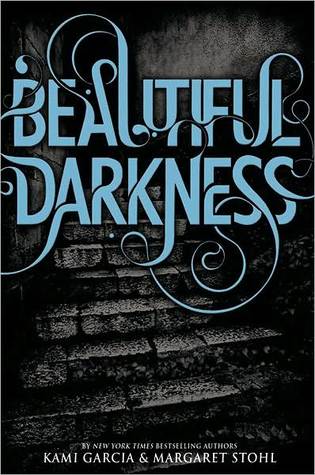
This week's teasers come from Beautiful Darkness by Kami Garcia. I read book 1 like two years ago and am finally getting around to the sequel. (Yea!)
Another crash. Now I was covered with the fine white dust of her fallen ceiling, broken chunks scattered on the floor around me. That's not what I meant and you know it.
Do I? All I know is that it shouldn't be so hard. Loving someone shouldn't be so hard.
I never cared about that. I felt her fading away, pushing me out of her mind and out of her heart.
What are you reading this week?
Monday, June 8, 2015
5 Qualities Characters in the Mystery Genre Should Possess That You Probably Haven't Considered
|
| Source |
Today, we'll focus on the Mystery Genre. I write crime fiction, but truly this could apply to any story that involves any kind of mystery, and the characters exploring it.
If you're trying to unfold a mystery for your readers, be it a full on murder or just a minor subplot, at least one of your characters should have at least one of these qualities:
 |
| Source |
2) Really NOT curious -- This can be used too, though it tends to be a little more tongue-in-cheek. The kind of character that is constantly trying to get away from the things happen around or to them can be a little wearying for the reader after a while, but when done right, it can keep the reader interested in what might happen to the character next. It's also a great way to introduce comedy into a potentially dark mystery.
Other qualities for characters in mystery stories:
3) Observant -- They're pretty much observing clues FOR your reader, so they have to be able to pick up nuances in a believable way. They don't necessarily have to be smart enough to put the mystery together (just depends on the character and how you're telling the story) but they have to be able to absorb what's happening around them.
 |
| Source |

5) Resilient -- Mysteries by nature tend to be shocking, so your character, especially if they're in a dire situation, needs to be able to absorb what's happening and move on. They can find an emotional outlet later, but make sure they have at least some resiliency to get them through the dark parts first.
After creating the characters that will be walking through your mystery, make sure you add these qualities, or some variation of them in. It will make the characters more compelling and memorable to your readers. If at any point you're having a hard time getting your character to do what you want, in a believable manner, then there is a good chance they are lacking one or more of these qualities.
Mysteries are compelling to human nature. We can't help but sink our teeth in. But only certain kinds of people can carry a mystery novel for your readers. Make sure your characters are some of them!
What's your favorite character in a mystery story?
Monday, August 18, 2014
The 10 Kinds of Villains and How They Can Deepen Your Story

It's been a while since I did a post on villains, but the above picture is one of my faves from Pinterest and it makes me laugh every time I see it. I hope you've all seen enough of the featured villains to appreciate the humor. It got me thinking about different kinds of villains and the different roles they can play in a story. As an author, you don't want to do the same kind of villain all the time. Changing it up can add depth and variety to your plot, pulling your readers into it even more efficiently. Which is pretty much the whole point.
Monday, July 7, 2014
Creative Challenge: Character Sketch
It's Monday, and time to get our creative juices flowing! Tell me about this picture. What do you think? Good guy? Bad guy? What's he doing? What powers/talents does he have. Is he a sympathetic character? Flat/dynamic? Tell me his story!

What did you come up with?
Monday, March 3, 2014
How to Step Up Your Characters So Readers Will Shut-Up, Read, & Remember
We all know our characters need to be well-rounded and jump off the page in order for our readers to both connect with and remember them. Most of us know the basics of character development, but what if you're doing all of that stuff and still feel like your characters are a bit blah. Here are some tips on how to go above and beyond to make your characters fascinating, empathetic, and memorable.
1) Give 'em quirks. This is where the memorable part comes in. Your readers will remember your characters most for the goofy or eccentric things they do over and over again. Pick something that evokes a sensory reaction--an image, a smell, a visible action, etc. Show it over and over to ingrain it in the reader's mind.
2) Use torturous, scarring moments to define your characters. Now, I tend to do this literally. Many of my characters wear physical scar that they obtained during the most defining moments of their lives, but often the non-physical scars are much more powerful than the physical ones. They are somewhat harder to bring across on the page, requiring more thought and subtlety, but if done right, they tend to be unforgettable.
3) Give them religion. I don't mean organized religion. This can be a system of beliefs that's true to our world, or to the world you build for your story. Make them believe in something--anything--so strongly that they won't give it up for anything. Make it so drastic that, if their system of beliefs proves justified, it will mean triumph, but if it's flawed, it will mean their downfall. Either option can make for a fascinating story and an unforgettable character.
4) Make sure their actions are in line with their beliefs and goals, even if their words are not. This one's tricky, but can be highly effective. Check out my post about this if you are't familiar with OODs (Objects of Desire). In short, they're what the characters want, both in an overall, metaphysical sense, and literally, in the framework of the story. Sometimes the audience might not understand what a character was truly trying to accomplish until the end of the book. That's fine. But make sure their actions always point to it, even if the reader doesn't realize it.
As the saying goes, your character can lie about 5 things, but will make 10,000 decisions that are truthful.
Even if the character is deceptive to other characters in the story, make sure the reader sees the actions that are truthful. This will make him not only a true reflection of a real human being, but intriguing to no end.
If you already have the core of your characters down, use these suggestions to take your characters to the next level. They'll captivate readers, grip them by the chest and refuse to let go.
Have you ever used any of these techniques in your writing?
 |
| Source |
2) Use torturous, scarring moments to define your characters. Now, I tend to do this literally. Many of my characters wear physical scar that they obtained during the most defining moments of their lives, but often the non-physical scars are much more powerful than the physical ones. They are somewhat harder to bring across on the page, requiring more thought and subtlety, but if done right, they tend to be unforgettable.
3) Give them religion. I don't mean organized religion. This can be a system of beliefs that's true to our world, or to the world you build for your story. Make them believe in something--anything--so strongly that they won't give it up for anything. Make it so drastic that, if their system of beliefs proves justified, it will mean triumph, but if it's flawed, it will mean their downfall. Either option can make for a fascinating story and an unforgettable character.
 |
| Source |
As the saying goes, your character can lie about 5 things, but will make 10,000 decisions that are truthful.
Even if the character is deceptive to other characters in the story, make sure the reader sees the actions that are truthful. This will make him not only a true reflection of a real human being, but intriguing to no end.
If you already have the core of your characters down, use these suggestions to take your characters to the next level. They'll captivate readers, grip them by the chest and refuse to let go.
Have you ever used any of these techniques in your writing?
Monday, July 29, 2013
Portrait of a Adolf Hitler: 9 Way s to Make Your Villains More Unbalanced (and Creepier!)
 |
| Source |
A while ago, I was looking for information on Hilter's "carpet chewing" fits and came across a document about Hitler's temperament, based on reports of people who knew and worked with him. (All quotes from this source.) There are some really interesting aspects of his personality. None of them are at all admirable, but I think they could be great things to incorporate into a villain's character sketch.
1. Not forward-thinking or hard working.
"He is unable to maintain any kind of a working schedule...In later years the hours tended to get later and it was unusual, just before the war, for him to go to bed before daybreak. The night, however, was not spent in working as his propaganda agents allege, but in viewing one or two feature movies, endless newsreels, listening to music, entertaining film stars or just sitting around chatting with his staff."
2. Afraid of the dark.
Wednesday, July 24, 2013
How to Create Characters like Frodo and Sam that Readers Will Get Behind for Years to Come
| Source |
In preparation for this holiday, I heard someone read the lyrics of a primary song that is relevant to the holiday. This is a very simplistic song that we teach our young children to sing. It's called To Be a Pioneer. It goes like this:
1. You don’t have to push a handcart, Leave your fam’ly dear,Or walk a thousand miles or more To be a pioneer!
2. You do need to have great courage, Faith to conquer fear,And work with might for a cause that’s right To be a pioneer!
We are marching, ever marching.We are marching, ever marching,Marching onward, ever onward.We are pioneers;
Subscribe to:
Posts
(
Atom
)