
Author Liesel K. Hill's Musings on Fantasia...
Showing posts with label LUW. Show all posts
Showing posts with label LUW. Show all posts
Wednesday, September 23, 2015
7 Tips for Making a Living With Your Writing
 |
| Dean Wesley Smith (Picture Source) |
As it turns out, Mr. Smith has been a working freelance writer since the seventies. He told us he has dozens of pen names, and most people who have read things he's written have no idea that he's the authors. But the world is changing and he had lots of great insights and tips.
Here are some of the things he had to say.
If you want to make a living on your writing:
- Keep your expenses low and have as few as possible.
- Productivity - defined as increasing the amount of product you put out over a given time. The more productive you are, the easier it is to make a living. This is definitely true. Though I'm not as productive as I'd like to be, I know the authors who make the most money are the ones who churn out ebooks every month or two.
- Write to your passion. Don't chase trends. By the time you do, they'll be over.
- Be a hybrid author. (Yea! Great to know I'm doing something right.) He said that the authors who are still here, writing and producing in twenty years will be the hybrid authors.
- Learn Business. I think this is a major problem for lots of authors today. They want to write, but don't want to learn how to market their books. Unfortunately, if you want to move books, you've got to be an enterpreneur today. Smith suggests we all learn cash flow (where the money comes from, where it goes, and how to cover expenses), cash streams (have multiple streams on each book/product and never look down your nose at even small ones), returns on investment (think long-term), and stay away from exclusivity (Exclusivity used to be big in the writing industry, but if you're thinking of your writing in the long term, exclusivity can work against you. Make sure you always maintain at least some rights to your books.).
- Everything is changing. We must keep up. It's part of the job!
- Continue to learn your craft. Always keep learning and become a better writer. The instant you say, I know everything about writing," you've just stunted your own career and your own potential. Entertainment has VALUE in our society. Take advantage of that, but never take it for granted.
 |
| Picture Source |
He also said he thought people like editors and formatters, etc. are superfluous. Kind of like agents, now. It's just something else to pay for that you don't need. I thought that was interesting. I kind of liked it as I do a lot of that stuff myself. (I format my own ebooks and have a writing group that does the majority of my editing for me.) To be fair, he did say copy-editing and proofreading for errors is a necessity, but he was talking about having editors for story, character, plot, etc. Just thought it was kind of interesting. But as I don't actually (and never have) paid for that type of editing, I do kind of agree. :D Of course I don't do my own cover art and we all know that you need an awesome cover, but that's something you an hire out on a case-by-case basis. And if I really wanted to be independent, it wouldn't be hard to learn to do digital cover art so I could do my own. (Honestly, I probably won't do that. It would just take too much time and I have too much on my plate right now, but I'm open to it for the future.) The point is, in this new world of digital publishing, it's possible to learn to do everything for yourself. As long as the finished product is high quality, your book will sell. Just something to keep in mind.
Some other great nuggets he had that I wrote down:
"Act like a writer, think like a publisher."
"Luck is not a business plan."
 |
| Picture Source |
He was also very knowledgeable about the history of publishing. He talked about how everyone is so scared about the upheaval in the industry right now, but it's really not any different than what's happened in the past. He told stories about when printing first came about, when novels first were mass-produced, how back in the day, every author by definition was self-published. Our big publishing house model is actually a relatively recent (last 50-80 years, depending on how you look at it) thing. And this is just the cycle repeating itself again. I thought his stories were fascinating.
I talked to him afterword and told him he should write a history of publishing. He seemed to consider it but said it would take a hella lot of work. I said I was sure it would, but I would totally read it. He kind of got this smile on his face and thanked me for the suggestion.
I don't know if he will, but I hope he does. Maybe only nerdy authors like me would be interested in reading that, but I'd totally be the first in line. He's the kind of guy that's a wealth of knowledge, only a portion of which has ever been written down.
So if you ever get the chance to meet or listen to Dean Wesley Smith, totally do it. He's a fascinating guy and very knowledgeable about the industry.

Monday, September 21, 2015
12 Tips for Handling Cliches in Writing
 |
| Picture Source |
First let's define what we're talking about here.
Cliche: A pattern of meaning that loses meaning through repetition rather than gaining meaning. When you see a part of the pattern, you can predict the whole, and that prediction detracts from the impact.
A couple of things to consider:
- Patterns of any size and/or complexity can become a cliche.
- Believe it or not, a cliche is not defined strictly by how often it is used. It's defined by how often an audience is exposed to it. So to avoid cliches, you MUST understand your audience.
- Understand that we, as human beings use and gravitate toward cliches because they are associations that make sense to us. They're familiar and comforting. But of course they become a liability in our writing.
 |
| Picture Source |
Cycle of Cliche Formation - We'll use an obvious example: Twilight.
- Innovation - The first time someone associates the cliche. (Example: Twilight, the first time anyone described vampires as sparkly, unavailable romantic figures, hits the air waves).
- Adoption - The idea is adopted by others and begins to proliferate. (Twilight becomes more popular.)
- Saturation - When the cliche has reached it's limit for finding a new audience. (Everyone has read or at least heard in detail of Twilight.)
- Satirization - The only way to make it effective again is to make fun of it. (Vampires Suck, anyone? Also more general stuff like pop culture jokes, SNL, etc.)
- Rejection - It's so ubiquitous that you can't even make fun of it anymore because the jokes are old and dry, and no one wants to hear even them anymore. (This is pretty much the stage we've reached with Twilight, now. Everyone is sick of hearing about sparkly vampires.)
- Reinvention - Will take the cliche and do something different with it that blows people's minds and the cycle begins again. (Not sure we've reached this with vampires in general, but Fifty Shades of Grey, which started as Twilight fanfic, could qualify.)
So this is the general cycle of cliches. By knowing it, you can use it to adopt, avoid, or make good use of cliches.
 |
| Picture Source |
Techniques for Avoiding Cliches:
- Understand the difference between a trope and a cliche. A trope should increase the experience. Because a trope has been used before, it adds to the way you use it, which is opposite of a cliche, where the prediction diminishes the impact. Example: love triangles. Really, because we're all different people depending on who we're with, what we're really asking a potential heroine to do is choose who she's going to be. So if you have well-rounded, three-dimensional characters and situations that haven't been done a million times, a love triangle is actually NOT a cliche. The idea of the love triangle becomes a trope and enhances the story. However, if the characters have been done (they just so happen to be a lot like Edward Cullen and Jacob the werewolf) or the plot/world/scenes have been done a million times, then it becomes a cliche VERY quickly.
- Be Specific. Specificity forces the characters, through conflict, to reveal who they are. If they feel like real people then you've been specific enough to use the trope without it being cliched.
- Don't use archetypes in drafting. Only in revision. Figure out your story first, then you can go back and decide if and how you want to use any possible tropes or cliches that pop up.
Techniques for using cliches to your benefit:
- Repackage the cliche for an audience that hasn't been exposed to it. Example: Prior to Twilight, the only people reading vampire lit were those who liked the horror and high sexuality of Ann Rice. Vampires had never been pitched to teen girls before. And boy did that repackaging have some success.
- Use cliches to inform the audience about your characters. Anyone who uses a lot of cliches in their dialogue or narrative thoughts automatically comes across as having a lower IQ than those who don't. So you can use it as a character-builder.
- Keep in mind that the younger your audience, the more you want to use cliches. If you're writing for children, you SHOULD be using cliches. They're too young to have been overly exposed to them yet and the cliche itself will teach them about the world.
How do you take cliches into consideration in your writing?
Wednesday, September 16, 2015
11 Tips for Formulating a Powerful Premise
 |
| Picture Source |
Actually, I think he said some of the most powerful, memorable things I heard at the conference.
"Originality is the sum total of a man's thinking or his writing."
So he talked about how the brain works and what is actually happening in our brains chemically when we come up with a new writing idea. He says that when we think of something, our brain recognizes it as something alien; something we never thought of before. Almost instantly there's the maybe-that's-a-stupid-idea-and-no-one-else-will-like-it backlash. But that's just because it went from being new and alien to us, to being something our brain recognizes now as part of our universe.
"The fact that you want to tell a story means that it's a story worth telling. There are no stupid premises."
We also all know that there's no such thing as an original story. All stories can be boiled down to their component parts and really there's only something like six individual stories. The rest is all in the details, the world-building, the characters, and the overall execution of the premise.
"Law of the Premise: Success is a matter or execution, not premise."
Formula for a Powerful Premise:
Specific + Authentic + Meaningful = Powerful Premise
Specific: Refined to a the particular, rather than the generic. God is in the details, people.
Authentic: Reflects lived emotional reality. You know that saying, "write what you know?" Clint talked about it and I agree with what he said. "Write what you know" is a good place for first time authors to start, but more seasoned writers will branch out to write what they don't know. It's a natural part of the creative process. So how do you still make it authentic? By extrapolating emotions from the reality you HAVE lived and infusing them into the fiction that you haven't. If you can do this, you can make your story feel as real as if you really had lived it, whether it's a coming of age story, a murder mystery, or a world full of dragons and warlocks.
Meaningful: Write what you care about. It will come through your writing and grip people. If you don't care, they won't either.
 |
| Source |
11 Points for Where/How to Find Good Premises
1. A premise starts as a seed. Just a thought. It simply what stands out to YOU, what is meaningful, and what you care about. Record these stray thoughts as they may develop into compelling premises.
2. A good premise is made up of several seeds all put together. Look for patterns, rather than points, and don't rush the formulation of a premise. (Sources can include: life's meaning, otherness, paradoxes, etc.)
3. Craft your story BEFORE writing.
4. Invest time in your creative thinking. Even if you don't hit word count, don't be negative. Judgement and creativity come from opposite sides of the brain. Too much judgement strangles creativity. (I'll talk about an exercise for this below.)
5. Build a base that's specific, authentic and meaningful. Only once you have this should you start writing.
6. At some level, even if it's unconscious, every story is character-driven. The soul of your story is about the emotional change of your characters from beginning to end.
7. Don't struggle with whether it may or may not be good. Clint talked about the "inevitability of disappointment." Basically at some point we'll all doubt our stories and whether they're good enough. That doubt will keep you from writing; will keep you from completing your story and reaching your goals and dreams. (Basically, tell the Inevitability of Disappointment to go to hell, and keep writing.)
8. Identify themes and archetypes AFTER your first writing and flesh them out in revision drafts. Theme is an emergent property and will reveal itself as you kick out your story. Not before. (I actually do a presentation on Plot Points. I'm a major believer in plot points, but I do agree with Clint that they are more useful as tools AFTER the story has been crafted, rather than a template to use to craft the story. If you use them that way, you may well end up writing to a cliche, which is not a good thing.)
9. Craft your story AFTER writing. Now, #3 says before, which is the opposite of this. Just do it again. Get your story written, then identify themes and archetypes, and use plot points to craft your story after you have the initial draft kicked out. Continually craft your story until it is awesome.
10. Make the story more of what it is. Identify strengths and weaknesses. Have you ever heard doctors or dietitians say that, when someone has high cholesterol, it's actually more effective to up their good cholesterol than to lower their bad? Well it's true. Improving the good is actually more effective for overall health than just blocking out the bad. That's true of all things in the universe. So by all means, compensate your story's weak points. But it'll be even more effective to make your strong points stronger.
11. A great premise is the product of man premises, so produce A LOT of them. Embrace and gather every idea.
 |
| Source |
So basically he just told us to start writing whatever came into our heads. Go from subject to subject, association to association and just let the words/ideas flow. Don't think too hard. Don't reject anything. Just write as much as you can as fast as you can. Time it. When you're done, extrapolate your premise or plot from your thoughts.
I've started doing this even for things like writing chapters. I know the general things I want to have happen in a chapter, but I do this exercise where I just write and let things flow for anywhere from 5-20 minutes. By the time I'm done, I have enough on the page to write up a detailed outline of the chapter. This can also be done for fleshing out characters, backstories, fantastical worlds, or entire premises.
Try it. It's very effective!
Anyone have any other thoughts on crafting premises?
Monday, September 14, 2015
13 Points for Making Magic Believable
So two weeks ago now I attended the LUW conference. One of the classes I went to was Maxwell Alexander Drake's "Making Magic Believable." Now, Drake is usually there and I try to attend one of his classes because he's such a great presenter and so knowledgeable about writing in general. You're sure to get an hour of entertainment as well as great information that will get you all pumped up to write. I didn't remember ever having gone to this particular class (as it turns out, he'd never taught it before, so that's why :D) but I'm still puttering around with my Dragon Magic script, hoping to have a finished product by the end of the year.
Honestly, the magic system is the thing that's holding me up. So this class was perfect for me, no?
So here are some tips for making magic believable via the wonderful Maxwell Alexander Drake. (Visit his website at MaxwellAlexanderDrake.com for more writing info. He generally has worksheets of his classes you can download under MAD Writing Lessons.)
Okay, so he starts out by saying this:
If science fiction can be defined as making the improbably possible, then fantasy can be defined as making the impossible probably.
Role of Magic in Fantasy Stories:
Honestly, the magic system is the thing that's holding me up. So this class was perfect for me, no?
So here are some tips for making magic believable via the wonderful Maxwell Alexander Drake. (Visit his website at MaxwellAlexanderDrake.com for more writing info. He generally has worksheets of his classes you can download under MAD Writing Lessons.)
Okay, so he starts out by saying this:
If science fiction can be defined as making the improbably possible, then fantasy can be defined as making the impossible probably.
 |
| Source |
- It is a distinction of the genre - any genre with magic is automatically considered fantasy.
- Adds an expected element - I thought that was interesting. You would think it would add an unexpected element, but nope. Readers of fantasy expect this and will look for it.
- Enhances discovery of the story - readers will quickly get to know your world, your characters, and your story through the magic system you present.
- Helps facilitate the narrative - Ditto #3
- Is visually appealing - Yeah this is one of my problems. Often my magic systems aren't visual enough. It's something I have to work on.
- Provides a source of conflict - And we can all use more of that in our stories, right?
Warning: Magic general has to do with controlling the elements and/or supernatural powers, but the magic should never be your end game. The magic should only be used to enhance the human elements of your story!
13 Points to Include in Your Magic System:
 |
| Source |
- Magic must fit the feel of your story: so a dark, tragic story should have dark, tragic magic. A happy, fun story should have magic to match.
- Choose your magic level: A. Ambiguous (has no/few rules and can make up a rule any time the story needs one) B. Defined (detailed rules and boundaries and consistent, logical consequences). C. Semi-defined (something in between or a mashup of the two).
- Abilities: decide how you want your magic to affect your plot, then decide what your magic can do.
- Limitations: these are things the magic CANNOT do and they're often more interesting than the abilities. They'll be your character's/magic's weaknesses. Having limitations will help to keep you from using magic as a crutch every time you get into a bind with your plot. It will also make the system more believable. The limitations of the magic should force your characters to overcome obstacles. It will keep your characters three dimensional.
- Weaknesses: these are things that can be exploited, allowing the story to remove your characters' magic. Be careful not to overuse weaknesses, as they quickly become cliche.
- Costs: a negative consequence for using the magic. Adding this adds dimension to your story. The reader will see real world consequences for things that are happening. The cost should be great enough that your readers either 1) struggle with the character's questionable decisions or 2) they become connected to the characters in a more visceral way. The readers should either love or hate the characters (heroes and villains alike. :D).
- Make
it visual: There should be a wonderful, exciting thing to describe each time the magic is used.Source - Quality over quantity: too much can over burden the narration.
- World Building: Extrapolate from the magic. So, "what happens when..." It can help you round out your world.
- World Building: Diversify the magic. Use it in new and different ways (have the characters figure out how because people are innovative and inventive) rather than adding new stuff.
- World Building: Interconnect everything. When a magical tool is discovered, it will be used by all of society in any way they can. (Think of how cell phones have saturated our society.)
- Define Magic's Origins: even if you never tell your readers where it came from, you, the author, should definitely know.
- Don't break your own rules: It actually can be done, but there must be a solid, believable, plot-driven reason for doing it or else you'll lose your readers' trust.
So I am actively applying all of these to my WIP to flesh out my magic system. I hope this is helpful for everyone else too.
Anyone have any more tips on making magic believable?
Monday, September 15, 2014
LUW Annual Conference (Awesome!)

Anyway, I didn't enter anything into the regular contest this year. I usually do, but the deadline was back in June and it just snuck up on me this year. I didn't have anything to submit, or any time to prepare anything by the time I realized the deadline was looming. Instead, I just entered my two published novels. Dark Remnants didn't win anything, but Citadels of Fire won the Silver Quill (second place, with the Gold Quill being first) in the adult category.
 |
| Citadels of Fire with Silver Quill sticker, plus the award itself. |
I was so honored and happy to have won something. It was a great conference, and I had tons of fun networking with new authors and reconnecting with some I hadn't seen in a while. CoF winning was just icing on the cake.
Emily Yonkers (this year's president) even said they were working on putting the winning books on the League's website to sell, which I was very pleased about. :D
And, as I put on Facebook last night, us JFP authors really cleaned up! Jolly Fish Press is my publisher for Citadels of Fire, and all the JFP authors have a really good camaraderie going. No less than four of us won published book awards last night. (I think at least one of the two top quills in each category went to a JFP author!) So yes, we totally kicked butt!
 |
| From left to right, Eric Bishop (Gold Quill for adult lit), Johnny Worthen (Gold Quill for YA lit), me (Silver Quill for adult lit), and Lehua Parker (Gold Quill for Children's Lit). How cool are we? |
Plus, the wonderful Johnny Worthen (another JFP author who's having a positively breakout year) was the keynote speaker, won one of the quills for his YA novel, and won writer of the year. I love Johnny. He's so full of positive energy that you can't help but smile when you hang out with him. His keynote speech brought down the house. Most of us were falling out of our chairs laughing. He was just that entertaining.
 |
| Johnny giving his uproarious and inspiring keynote address. |
Overall, I really enjoyed the conference. It was so much fun! I even sold a handful of books. (Yea!) I feel rejuvenated and inspired to plow through my editing (there are two different books I'm working on) as well as keep writing my current WIP (book 3 of Interchron).
I also want to get more involved in the League again. As with my writing, I've really slacked off the past few months. Since I moved into my new place (5 mos ago, now. Where does the time go?) I haven't visited the Clearfield chapter. I mean to do that now. Even though they're just monthly meetings, I think they keep me on task with my writing.
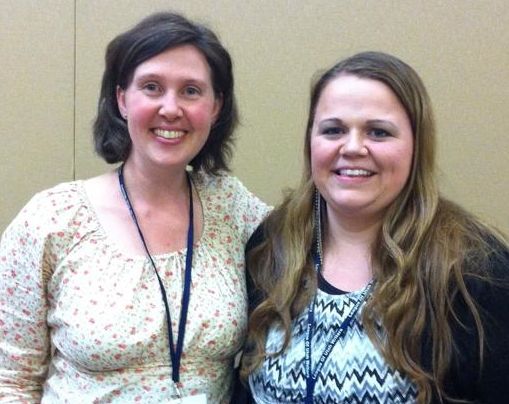 |
| Sweet Author Elsie Parks and Yours Truly |
 |
| More winners! Eric Bishop, Johnny Worthen, me, Lehua Parker, and Christine Haggarty, who also taught an awesome class on writing fight scenes. |
How about you? Have you attended any great writing events lately?
Monday, September 23, 2013
Award-Winning Manuscripts + Character Spotlight

 |
| Source |

In the published book contest, Persistence of Vision came in at 2nd place, winning the prestigious Silver Quill Award! Yeah!


So, have you entered any writing contests lately?
Subscribe to:
Posts
(
Atom
)