
Author Liesel K. Hill's Musings on Fantasia...
Friday, April 3, 2015
A to Z Challenge: C is for Conflict
Welcome to April. With its customary showers comes the Blogging from A to Z Challenge. For those who are unfamiliar with it:
The brainchild of Arlee Bird, at Tossing it Out, the A to Z Challenge is posting every day in April except Sundays (we get those off for good behavior.) And since there are 26 days, that matches the 26 letters of the alphabet. On April 1, blog about something that begins with the letter “A.” April 2 is “B,” April 3 is “C,” and so on. You can use a theme for the month or go random – just as long as it matches the letter of the alphabet for the day. (Source)
The A to Z Challenge is a great way to get into the blogging habit and make new friends. For more details and its history, go HERE
My theme this year is EDITING.
I'll be posting practical advice for editing any story, novel, or other piece of writing. Editing is something most authors struggle with, and after years of doing my own as well as that of others, I have a pretty good eye for what needs work. I'll be doing short posts on editing topics and (hopefully) dispensing simple, valuable advice to help everyone out there self-edit.

C is for Conflict!
So how do you edit conflict, you ask?By asking questions. One thing my writing group is fantastic about is making sure that every chapter I give them has enough conflict in it. I always think my chapters serve a purpose, of course, but sometimes I don't put enough of the conflict the character is experiencing in a particular scene the first time through. When I edit, I have to go back through and make sure that the reader can feel the conflict in every scene.
So follow these steps to edit conflict:
1) Ask yourself, what is conflict for this chapter? Man vs. man/nature/himself/etc. Figure out what it is for every character in the scene.
2) What are OODs for each character? OOD stands for Object of Desire. Each character should have a literal OOD (something they are actually trying to gain/accomplish such as throwing the One Ring into Mordor's fires, locating the chamber of secrets, winning a crush's heart, etc.) and a figurative OOD (world peace, happiness, power/wealth, etc). For more on OODs, see this post.
 |
| Conflict (Source) |
4) Ask how you can enhance the conflict. How can you make it more human, more compelling, more heart pounding? For example, if the conflict in your scene is all presented internally, through thought, could you change the scene so that it came out as a conversation or even altercation between two characters? Can you up the stakes, show more raw emotion from the character, throw in some action get more adrenaline into the conflict?
If you can ask and answer these questions, and improve your scene accordingly, you will have edited the conflict in your story so that it grips your reader and doesn't let go.
How do you convey conflict in your writing?

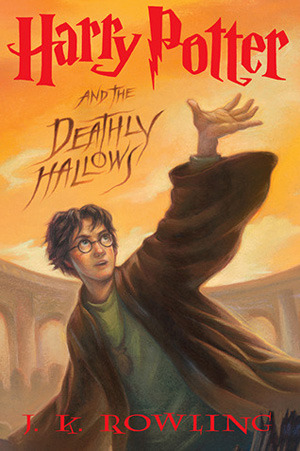
Book Review: Harry Potter and the Deathly Hallows
 |
| Source |
(If you're one of the four people in the world who haven't read or seen HP yet, be warned there may be spoilers below.)
Hooray for Harry Potter and the Deathly Hallows!
Hooray for Harry beating Voldemort, discovering the truth about Snape, forgiving Dumbledore, and achieving everything he could have ever hoped for! And of course for him ending up with Ginny, and Ron and Hermione staying together as well.
I love book 7. It was so epic. One of those fantasies that you worry will be a disappointment after all the buildup and hype of the previous books, but then surpasses all your expectations with flying colors, all with an ease and seamlessness that only a true, legendary author could pull off.
I tend to blubber through a lot of the ending of this series, and not just the sad parts. Some of its epicness is so gripping (even though it's awesome, not tragic) that it just brings me to tears. (What can I say? I'm a girl. Deal with it!)
Most of all the thing that always strikes me about this book is how well Rowling gets her concepts across. There are so many lines that are beautiful and concise, summing up all the underlying themes of her story without being too wordy or in-your face.
Some of my favorite lines:
"After all this time.""Always." (pg. 687)
"...who would he want to bring back from the dead? He fears the dead. He does not love." (pg. 721)
"Of course it's happening in your head, Harry, but why on earth should that mean it isn't real?" (pg. 723)
"Albus Severus," Harry said quietly..."you were named for two headmasters of Hogwarts. One of them was a Slytherin and he was probably the bravest man I ever knew." (pg. 758)
 |
| Source |
What I would like to have seen:
More details about Dumbledore's past, and when he told Harry about his sister in his own words and cried. That was unspeakably powerful, but left out of the film. As with film #5 and somewhat at the end of #6, they always seem to skimp on the really powerful emotional stuff. Don't know why they do that, but I'm always a bit bugged by it.
And of course there are always the humorous details that get left out. I especially loved some of the hilarious images during the final battle. The broken gargoyle Harry stepped over that said, "Oh don't mind me. I'll just lie here and crumble." Or the image of McGonagall using student's desks to fight Death Eaters, running around the corner and yelling "Charge!" I crack up every time. Wish we could have seen that.
What the film did well:
I liked that it added the scene where Snape went and hugged Lily's body after she died. While it really compressed some of the rest of the history, that made it so the material point and the powerful emotions of Snape's unrequited love came across. Very well done. Also the epicness of the battle between Harry and Riddle, getting to see Neville triumph, and getting to see Mrs. Weasley kill Bellatrix were all there. Kudos for those. And of course the 19-Years-Later ending was done very well too. Loved it!
 |
| Source |
 |
| Source |
All I can say is, there is a reason Harry Potter is a classic. There's never been anything quite like it, nor will there be again. Our children and grandchildren will still be reading and enjoying the magic of Hogwarts and gaining character from reading about Harry's very human triumph over his arch nemesis, and the enemy of the entire wizarding world.
Did you like HP #7? What did you think of Hollywood's efforts?
Thursday, April 2, 2015
Follow Friday: Recurring Dreams

The Feature & Follow is hosted by TWO hosts, Parajunkee of Parajunkee's View and Alison of Alison Can Read. Each host will have their own Feature Blog and this way it'll allow us to show off more new blogs!
How does this work? First you leave your name here on this post, (using the linky tools -- keep scrolling!) then you create a post on your own blog that links back to this post (easiest way is to just grab the code under the #FF picture and put it in your post) and then you visit as many blogs as you can and tell them "hi" in their comments (on the post that has the #FF image). You follow them, they follow you. Win. Win. Just make sure to follow back if someone follows you!
Have you ever had a reoccurring dream? What was it? - SUGGESTED by Second Run Reviews.
I've only ever had one recurring dream. When I was a kid, I used to have dreams that I couldn't keep my eyes open. I would be at school or at the store or trying to hang out with my little friends, but I just couldn't keep my eyelids from slipping down. I couldn't see anything and was afraid I would miss stuff. In my dream, I always interpreted it as fear, though it was more just frustrating.
I know now that the dream had to do with my eyesight. I needed glasses at the time but didn't actually get them until I was forced. (I had to have them in order to get my drivers license at age 16, and heaven knows I wasn't putting that off. :D) Because I couldn't see, on a psychological level I was venting my frustrations in my dreams, and it came across as not being able to keep my eyes open. Weird, huh?
by Second Run Reviews.  |
| Source |
I know now that the dream had to do with my eyesight. I needed glasses at the time but didn't actually get them until I was forced. (I had to have them in order to get my drivers license at age 16, and heaven knows I wasn't putting that off. :D) Because I couldn't see, on a psychological level I was venting my frustrations in my dreams, and it came across as not being able to keep my eyes open. Weird, huh?
Have you ever had a recurring dream?
A to Z Challenge: B is for Beta Readers
Welcome to April. With its customary showers comes the Blogging from A to Z Challenge. For those who are unfamiliar with it:
The brainchild of Arlee Bird, at Tossing it Out, the A to Z Challenge is posting every day in April except Sundays (we get those off for good behavior.) And since there are 26 days, that matches the 26 letters of the alphabet. On April 1, blog about something that begins with the letter “A.” April 2 is “B,” April 3 is “C,” and so on. You can use a theme for the month or go random – just as long as it matches the letter of the alphabet for the day. (Source)
The A to Z Challenge is a great way to get into the blogging habit and make new friends. For more details and its history, go HERE
My theme this year is EDITING.
I'll be posting practical advice for editing any story, novel, or other piece of writing. Editing is something most authors struggle with, and after years of doing my own as well as that of others, I have a pretty good eye for what needs work. I'll be doing short posts on editing topics and (hopefully) dispensing simple, valuable advice to help everyone out there self-edit.

B is for Beta Readers!
Beta readers (also called alpha readers, pre-readers, or critquers) are simply the first readers you give your work to in order to get reader feedback before presenting a finished product to the world.For me, I call them my writing group. Me and a group of local authors exchange pages weekly (as near as possible) and edit one another's work for plot, character arcs, mechanical issues, continuity, and any other issues that may arise.
Beta writers are immensely important for all writers and people telling a story. Often what a piece of writing sounds like in our own heads isn't what it will read like to others. Beta readers help with this.
My writing group has basically taught me how to edit. By listening to the things I hear from them over and over again, I learn my own strengths and crutches and how to play to them. I also learn from editing the stuff my group has written and incorporating my advice to them into my own writing.
Recently I sent some edits back to a professional editor for one of my books which is being traditionally published. She said I had a good eye for words and editing, and most of the edits I had made were ones she would have made herself. I guarantee you this is NOT an innate talent. Rather, I have learned this from consistent, week-to-week contact with my beta readers.
So here's my advice on finding great beta readers:
 |
| Source |
2) I find that having other writers as beta readers is immensely advantageous. We all recognize our flaws in the writing of others and vise versa. We can tell each other to get out of our "writer" voices and into the reader's head, without causing insult. Let's face it. Having others read/edit your work requires a thick skin, and having other writers who empathize makes it much easier.
3) Reciprocate. Always do things for your group that you would like them to do for you. Don't expect people to give up their precious free time to edit your work for free, and get nothing in return.
4) Keep an open mind. Always be gracious about their edits. Keep an open mind to what they are trying to say, rather than being defensive. This is bar-none the fastest way to learn and grow as an author and improve your writing.
5) Get plenty of work done, but also have fun. Editing doesn't have to be a tense, serious activity. My writing group are some of my best friends. We spend the first ten minutes of group talking about our weeks, swapping funny stories, and talking about fun, upcoming plans. I look forward to group because it's genuinely enjoyable. Love, trust, and be friends. No one will understand you like your writing group.
**One caveat I will list is that while using other authors as beta readers is definitely recommended, it is also true that authors read manuscripts differently than other readers do. It may also be a good idea to have another group of beta readers who are not authors to get a more general impression about how your book will be received after you have fine-tuned your manuscript.
What kind of beta readers do you use?
Johnny Worthen Interview
 |
| Johnny Worthen, Author |
Hi Johnny! How’s life? Poison any nice authors lately?
I’m trying to snare more victims into the Blog Mansion, but since you escaped, I’ve been concentrating on personal promotion with my new book coming out.
That's probably smart. So you have a new book out April 6th. (Lucky date, by the way). Can you tell us about it?
THE BRAND DEMAND is a mystery inspired in part by Edward Abbey’s MONKEY WRENCH GANG which inspired me back in the day. The spooks in my story are of the government type instead of the supernatural. It’s political insofar as the protagonist is motivated by his political views to use blackmail to deal justice and become something of a Robin Hood, taking from the rich and hypocritical and giving to the needy, which happens to include him and his gang. It’s based in Utah with a bit of social commentary and a tour of some of the cooler places around here. There is romance and action, twists and turns, huge stakes and personal growth and a climax that is at once rewarding and tragic.
Wednesday, April 1, 2015
A to Z Challenge: A is for Action
 |
| Source |
Welcome to April. With its customary showers comes the Blogging from A to Z Challenge. For those who are unfamiliar with it:
The brainchild of Arlee Bird, at Tossing it Out, the A to Z Challenge is posting every day in April except Sundays (we get those off for good behavior.) And since there are 26 days, that matches the 26 letters of the alphabet. On April 1, blog about something that begins with the letter “A.” April 2 is “B,” April 3 is “C,” and so on. You can use a theme for the month or go random – just as long as it matches the letter of the alphabet for the day. (Source)
The A to Z Challenge is a great way to get into the blogging habit and make new friends. For more details and its history, go HERE
My theme this year is EDITING.
I'll be posting practical advice for editing any story, novel, or other piece of writing. Editing is something most authors struggle with, and after years of doing my own as well as that of others, I have a pretty good eye for what needs work. I'll be doing short posts on editing topics and (hopefully) dispensing simple, valuable advice to help everyone out there self-edit.

A is for Action!
When we talk about action, there are really two kinds. 1) General action meaning bodily movement, as in action vs. dialogue or narrative. 2) Action can also be specific to a type of scene, as in an action scene rather than one where characters sit around, talking.
I'm going to give some quick tips for editing both kinds of action.
General Action:
1. Break up any long, narrative paragraphs with some action. It doesn't have to be much to keep your readers' attention and keep them grounded in the scene.
Book Review: Eleanor by Johnny Worthin
 |
| Source |
**Though I do discuss my general reaction to the book's ending (whether I liked it, whether it fit the story, etc.) I stay away from spoilers for the most part. You don't have to worry about reading my review even if you haven't read the book.**
Plot: Eleanor isn't like other girls her age. She hangs out on the outskirts of the high school social circle, lives with her adoptive mother who has a nasty case of terminal cancer, and has several closely-guarded secrets. When David, a boy Eleanor hasn't seen since he moved out of the area years before returns, she starts to remember what it was like to have a friend again. She thinks she's headed toward her own inevitable doom, but her experiences with David and her mother may help her capture the human experience better than ever before.
Characters: I found Eleanor to be a very compelling character. She may not be exactly human, which makes her new to everything in high school, society, and the world at large. You can't help but sympathize with Eleanor and her plight. Tabitha and David are also very real and compelling. The main villains come from the community at large and the hostility of school bullies. Overall, I found all of them to my liking.
Subscribe to:
Posts
(
Atom
)