
Author Liesel K. Hill's Musings on Fantasia...
Showing posts with label For Writers. Show all posts
Showing posts with label For Writers. Show all posts
Monday, January 15, 2018
Ax Those Crutch Words: BUT

Picture Source
Good morning, lovely readers! Welcome to my series on crutch words and passive voice, as I know this is something we all struggle with.
If you've ever read your writing and thought it sounded sub-par or unprofessional, but just didn't know how to fix it, chances are you're leaning on crutch words or using passive voice. I'll show you how to fix that.
The truth is that writers don't have enough of a science behind fixing this sort of thing. Sure, most of the really great writers out there stay away from crutch words and passive voice, but most of that is instinctual for them, after a lot of hours of writing and learning and honing.
Even most other authors you'll find may be able to tell you that something is lacking in your writing, but even they may not know exactly what it is or how to fix it. Or even if they can pinpoint it, it's hard for them (for any of us) to give actual, definable steps toward fixing our weak writing.
Saying, "Do it better," really doesn't help much. Especially newbie writers who really want to write better, but simply don't know how.
Here's where I'll start giving tips to help you out with this. Because there are many MANY offenders when it comes to crutch words, and they nearly always lead to passive voice. So if you cut out your crutch words, 99% of the passive voice in your writing automatically goes away. Isn't that amazing? And you get the added benefit of tighter, more grounded writing. The kind readers love to read and publishers love to publish.
Today's offender: BUT
|
| Picture Source |
Good morning, lovely readers! Welcome to my series on crutch words and passive voice, as I know this is something we all struggle with.
"She wanted to help, but didn't know how."
I use this format in my writing a lot. I compare two things and separate the clauses with the word
"but." It's certainly not a bad thing. Especially if you don't do it
and need a way to change up your sentence structure, try it. But (hehe) I do it
too much. I also start too many
sentences with the word "But."
So for this, I go through and read each "but." If
I can separate the two clauses into two sentences without changing the meaning,
I do. If the "but" must be there, and I can't find any other way to say what I
want, then I leave it. Again, I find I can always get rid of most instances of
this without changing the story at all. At least, I can easily get down to the
1% rule.
Example 1: It felt cowardly, but confronting him would have
to wait.
The Fix: It felt cowardly. Yet
confronting him would have to wait.
Example 2: He needed to
get in line, but tied his shoe first.
The Fix: He needed to
get in line. He tied his shoe first.
(Of course, you should change up your sentence structure
here as well, so it doesn’t feel so repetitive. You get my drift, though.)
Last Resort Synonyms:
1. And - "But" should
only be used if differentiating something. Showing how something is different
than what you said in the first clause. Often it's interchangeable with
"and."
Example 1: He went to
the store but couldn't find what he needed.
The Fix: He went to the
store and couldn't find what he needed.
2. Except - This works in a case where
"but" is being used to show a remnant of something.
Example 2: He took all
the cookies but one.
The Fix: He took all the
cookies except one.
Again, these are "last resort" because you're
substituting one filler word for another, even if the one you swap for isn't a
crutch for you. Use with caution.

Check out Ax Those Crutch Words: Part 1: Was and Part 2: Had.
Also, check out my other books at: www.authorlkhill.com.
How about you? Is HAD a culprit in your writing?

Tuesday, January 2, 2018
Ax Those Crutch Words: HAD
 |
| Source |
If you've ever read your writing and thought it sounded sub-par or unprofessional, but just didn't know how to fix it, chances are you're leaning on crutch words or using passive voice. I'll show you how to fix that.
The truth is that writers don't have enough of a science behind fixing this sort of thing. Sure, most of the really great writers out there stay away from crutch words and passive voice, but most of that is instinctual for them, after a lot of hours of writing and learning and honing.
Even most other authors you'll find may be able to tell you that something is lacking in your writing, but even they may not know exactly what it is or how to fix it. Or even if they can pinpoint it, it's hard for them (for any of us) to give actual, definable steps toward fixing our weak writing.
Saying, "Do it better," really doesn't help much. Especially newbie writers who really want to write better, but simply don't know how.
Here's where I'll start giving tips to help you out with this. Because there are many MANY offenders when it comes to crutch words, and they nearly always lead to passive voice. So if you cut out your crutch words, 99% of the passive voice in your writing automatically goes away. Isn't that amazing? And you get the added benefit of tighter, more grounded writing. The kind readers love to read and publishers love to publish.
Today's offender: HAD
1. Get rid of multiple past tense instances. "Had" shows up the most when you're
writing in past tense. "She had gone downstairs to find her shoes."
The thing is, you only need one instance of "had" to show you're
talking about something from the past. After the first instance, you can use
regular past tense. Observe the difference:
"She had
gone downstairs to look for her shoes. She had
gone into the bathroom. They weren't there. She had
then gone into her room, and had searched
every nook and cranny. Not finding them, she had
gone back upstairs to search the living room."
See how many "hads" there are? It becomes a
headache. Now let's take out those crutch words, leaving in only the first
instance to establish past tense.
"She had gone downstairs to look for her shoes. She
searched in the bathroom. They weren't there. She went into her room, searching
every nook and cranny. Not finding them, she went back upstairs to search the
living room."
See the difference?
2. Cut Filler. If
it makes sense without the "had," get rid of it. If the sentence only
makes sense with the had, then obviously keep it. I find that 50% of my hads
are filler and can be cut without affecting the sentence in the least.
Example 1: “Who’s Gabe?”
Jane had
demanded.
The Fix: “Who’s Gabe?”
Jane demanded.
Example 2: The phone
screen had
shown the number clearly.
The Fix: The phone
screen showed the number clearly.
Example 3: She had not
gotten any groceries.
The Fix: She didn't get
any groceries.
Example 4: He had come
to see the game.
The Fix: He came to see
the game.
Example 5: They had to
be mistaken.
The Fix: They must be
mistaken.
Example 6: She'd had to
learn the spell.
The Fix: She'd learned
the spell.
Check out my other books at: www.authorlkhill.com.
How about you? Is HAD a culprit in your writing?
Wednesday, December 20, 2017
For Authors: Promos That Work
Good morning! How was everyone's weekend?
***So I just found this in my blog drafts. It was meant to post back in October, but for some reason...didn't. *smacks forehead with palm* So here it is now. ;D***
I promised some time ago that as I started to do more promos and marketing, I'd share my results. Yeah, I've been kinda remiss on that, but I'm going to try and do better going forward.
So this post is for authors. If you don't have books to sell, or aren't interested in ebook promo, this post may put you to sleep. You've been warned. 😉
 So a couple of weeks ago, I realized my stand alone crime fiction, The Botanist, really wasn't doing so hot. It was sad and lonely and felt bad because it was getting picked last on Amazon. 😥
Of course that was my fault because I hadn't paid it any promo attention in months. So I decided it was the perfect time to experiment.
Because it's not part of a series, I didn't really want to do a free promo. Sure, free promos will get it into the hands of MANY readers, but it won't net me any cash. Obviously. Best to do free promos for the first book of a series, because many people will buy through. Stand-alones, not so much. Don't get me wrong, you can totally use a stand-alone for your book magnet, but I'm not ready to do that for The Botanist yet. I want Alex and Cody to get a little more love first.
So, I set up a promo using BargainBooksy, which is the sister site to FreeBooksy. I did a $0.99 promo for The Botanist. (I had to change the price to that on Amazon for a set period.)
The promo appeared on Bargain Booksy's site on a Saturday. I paid $55.00 for said promo.
I read about other authors who'd used this same promo, and they reported roughly 100 downloads. That's almost exactly what I got. 103, to be exact.
On the up side, since I'd only moved 2 copies of this book in the past six months, 100 downloads is great! I was super-stoked.
On the down side, at $0.99, you're only making about $0.35 per copy, which means the promo doesn't quite pay for itself. At least, not in downloads.
But...wait for it...
If your book is in KU (which The Botanist is) promos like these can still make you more money than what you made on downloads.
See, lots of people who see the promo have a Kindle Unlimited subscription. So they hop over to check and see if your book is there.
If it's not, SOME of them will probably download it. If they're interested enough and, let's face it, it's only $0.99, they may. I have no idea what the statistic on that would be. It probably just depends on the person, how much book money they have to spend this week and how alluring your book/cover/blurb is.
But many KU subscribers won't download a book even if it's not in KU because they're trying to avoid paying anything extra on top of their subscription.
But back to my experience. I noticed a definite upswing in page reads from KU. The promo ran on Oct. 7th. So you can see that before that there was no KU activity at all. (I'd actually only put this one in KU about a week before the promo, so that's a lot of why. The weekend of the promo, as you can see, there's a small blip. Each of those 4 little stumps represent between 100 and 200 pages. (Not much, but better than nothing, and remember you get paid for KU pages.)
But look at the rest of the month. Suddenly I was getting more like 500-1000 pages read a day. Often more than that.
Overall, the promo did pay for itself over about 60 days' time. I didn't make a huge amount of profit, but I broke event, made a small chunk of change over my expenses, and got my book in the hands of somewhere between 100 and 200 new readers. Small potatoes, but that's what promos should, right? Not bad for a stand alone.
Don't know what KU is?
KU stands for Kindle Unlimited. Think of it like Netflix, but for books. Subscribers pay a monthly fee that allows them to read any book in KU for free. As many books as they want, as many times as they want. Like Netflix, KU doesn't have every book Amazon offers. The author has to put it in there and there are criteria, like Amazon exclusivity, but it's a great way for newbie authors to get noticed and get paid. More details HERE.
Have you used Bargain or Free Booksy before? What were your results? Let us know in the comments! (And have a fantastic day!)
***So I just found this in my blog drafts. It was meant to post back in October, but for some reason...didn't. *smacks forehead with palm* So here it is now. ;D***
I promised some time ago that as I started to do more promos and marketing, I'd share my results. Yeah, I've been kinda remiss on that, but I'm going to try and do better going forward.
So this post is for authors. If you don't have books to sell, or aren't interested in ebook promo, this post may put you to sleep. You've been warned. 😉

Of course that was my fault because I hadn't paid it any promo attention in months. So I decided it was the perfect time to experiment.
Because it's not part of a series, I didn't really want to do a free promo. Sure, free promos will get it into the hands of MANY readers, but it won't net me any cash. Obviously. Best to do free promos for the first book of a series, because many people will buy through. Stand-alones, not so much. Don't get me wrong, you can totally use a stand-alone for your book magnet, but I'm not ready to do that for The Botanist yet. I want Alex and Cody to get a little more love first.
So, I set up a promo using BargainBooksy, which is the sister site to FreeBooksy. I did a $0.99 promo for The Botanist. (I had to change the price to that on Amazon for a set period.)
The promo appeared on Bargain Booksy's site on a Saturday. I paid $55.00 for said promo.
I read about other authors who'd used this same promo, and they reported roughly 100 downloads. That's almost exactly what I got. 103, to be exact.
On the up side, since I'd only moved 2 copies of this book in the past six months, 100 downloads is great! I was super-stoked.
On the down side, at $0.99, you're only making about $0.35 per copy, which means the promo doesn't quite pay for itself. At least, not in downloads.
But...wait for it...
If your book is in KU (which The Botanist is) promos like these can still make you more money than what you made on downloads.
See, lots of people who see the promo have a Kindle Unlimited subscription. So they hop over to check and see if your book is there.
If it's not, SOME of them will probably download it. If they're interested enough and, let's face it, it's only $0.99, they may. I have no idea what the statistic on that would be. It probably just depends on the person, how much book money they have to spend this week and how alluring your book/cover/blurb is.
But many KU subscribers won't download a book even if it's not in KU because they're trying to avoid paying anything extra on top of their subscription.
But back to my experience. I noticed a definite upswing in page reads from KU. The promo ran on Oct. 7th. So you can see that before that there was no KU activity at all. (I'd actually only put this one in KU about a week before the promo, so that's a lot of why. The weekend of the promo, as you can see, there's a small blip. Each of those 4 little stumps represent between 100 and 200 pages. (Not much, but better than nothing, and remember you get paid for KU pages.)
But look at the rest of the month. Suddenly I was getting more like 500-1000 pages read a day. Often more than that.
Overall, the promo did pay for itself over about 60 days' time. I didn't make a huge amount of profit, but I broke event, made a small chunk of change over my expenses, and got my book in the hands of somewhere between 100 and 200 new readers. Small potatoes, but that's what promos should, right? Not bad for a stand alone.
Don't know what KU is?
KU stands for Kindle Unlimited. Think of it like Netflix, but for books. Subscribers pay a monthly fee that allows them to read any book in KU for free. As many books as they want, as many times as they want. Like Netflix, KU doesn't have every book Amazon offers. The author has to put it in there and there are criteria, like Amazon exclusivity, but it's a great way for newbie authors to get noticed and get paid. More details HERE.
Have you used Bargain or Free Booksy before? What were your results? Let us know in the comments! (And have a fantastic day!)
Monday, December 18, 2017
Ax Those Crutchwords! The Worst Offender: Was
 |
| Source |
If you've ever read your writing and thought it sounded sub-par or unprofessional, but just didn't know how to fix it, chances are you're leaning on crutch words or using passive voice. I'll show you how to fix that.
The truth is that writers don't have enough of a science behind fixing this sort of thing. Sure, most of the really great writers out there stay away from crutch words and passive voice, but most of that is instinctual for them, after a lot of hours of writing and learning and honing.
Even most other authors you'll find may be able to tell you that something is lacking in your writing, but even they may not know exactly what it is or how to fix it. Or even if they can pinpoint it, it's hard for them (for any of us) to give actual, definable steps toward fixing our weak writing.
Saying, "Do it better," really doesn't help much. Especially newbie writers who really want to write better, but simply don't know how.
Here's where I'll start giving tips to help you out with this. Because there are many MANY offenders when it comes to crutch words, and they nearly always lead to passive voice. So if you cut out your crutch words, 99% of the passive voice in your writing automatically goes away. Isn't that amazing? And you get the added benefit of tighter, more grounded writing. The kind readers love to read and publishers love to publish.
We'll start with what I consider the worst offender of them all: WAS
Was is a word that is an integral part of the English language. You can't write a book without using the word was a few hundred times. It would be impossible.
There are many sentences in which the word is absolutely necessary, and that's fine. But this pesky little 3-letter word often makes its way into sentences where it doesn't belong, and serves absolutely no purpose, except perhaps to remove the reader a bit from the action, and that's never good.
Because was is such a huge problem in our writing, it can be used wrong in MANY ways. Below are some fixes for the most common over-uses I've found:
Monday, October 16, 2017
Why Some Films Tank While Others Fly: Learning From Hollywood
Has anyone else noticed how many
Hollywood films have tanked lately? I'd say the vast majority. There's a
specific reason for that, and we writers can learn a lot from it.
Disclaimer: While I am going to mention the political clime in a very general way, this is
not a political post. Not bipartisan. My own political beliefs will not be
mentioned. This is simply about good story-telling.
The political climate, both in the U.S. and around the world, is highly charged at the moment, and has been all year.
Probably won't calm down anytime soon either.
Unfortunately, many people continually try to force their beliefs on others. One way this is done
is through film. (Also through books, songs, commericals, social media, and many
other ways, but I'm just going to focus on films for this post.)
 |
| Source |
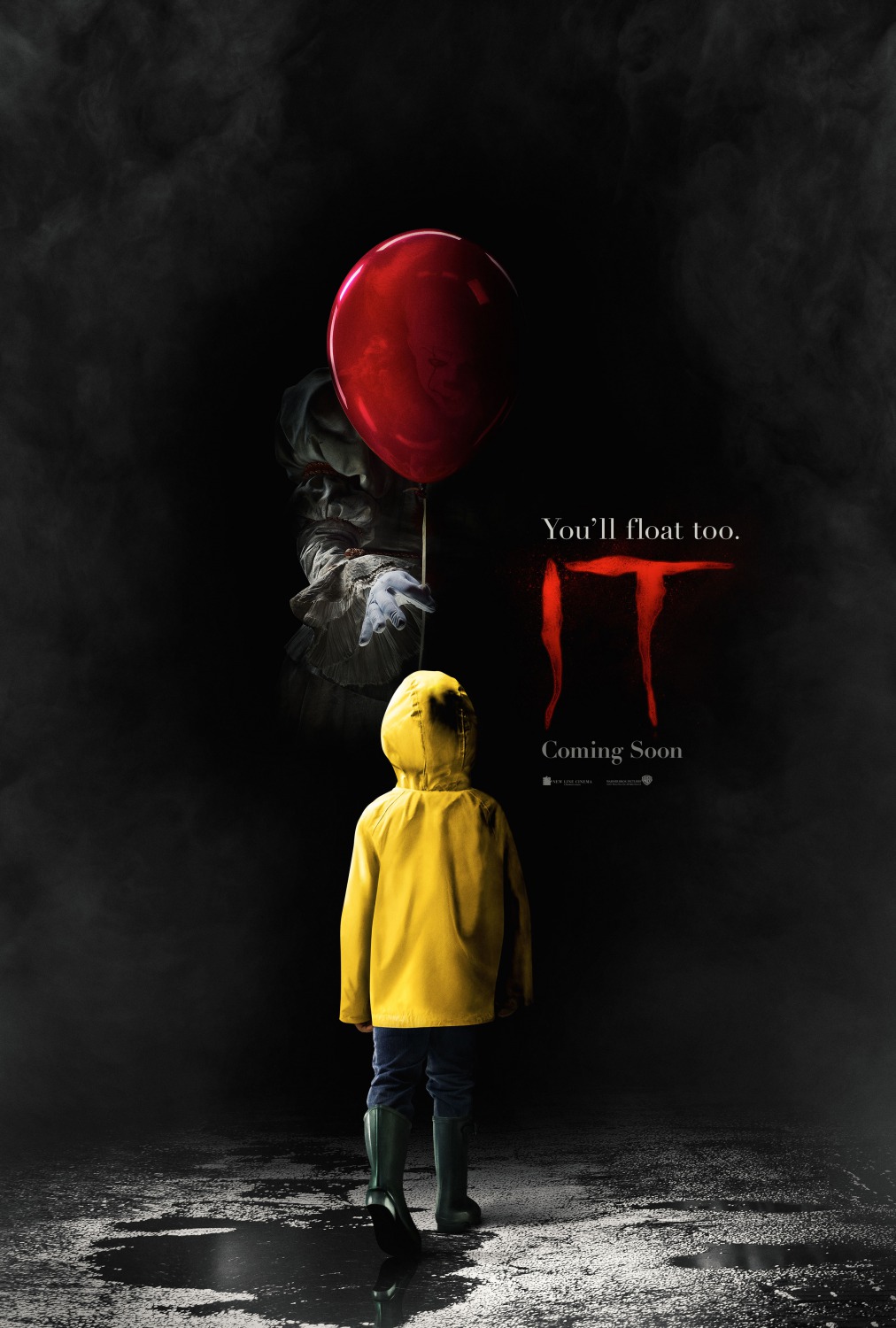
If you aren't aware, the Hollywood film that's done the best in past months is IT, adapted from Stephen
King's horror classic.
That may seem
counter-intuitive to those who refuse to see the film.
(If clowns traumatize you, I'm NOT going to recommend that you see this film. If you liked the book, I think you'll enjoy the movie. I thought they did an excellent job with it. They stayed away from gratuitous gore and some of the weirder (not in a good way) aspects of the novel. Truly it was more creepy than violent, which is how I prefer my horror.)
Even if you have no plans to
see the film, check out these facts below:
- IT has been at the top of the box office for longer than almost any other film of 2017.
- It's made over $300 million domestically.
- It's also popping all kinds of records internationally. (Source)
- It's being hailed as the Highest-Grossing R-Rated Horror Film of all Time (Source)
So why is it doing so well? There are several possibilities.
1. They
did such a great job making it. They really did! I know lots of people who love the 80s mini-series. If you do, more power to ya. I, personally,
was not a fan. It's probably because I only watched it a couple of years ago,
and it's really old. I didn't feel like it did the book justice. As with anything,
now that we have better technology and movie magic at our fingertips,
an update is just plain cooler.
 |
| Source |
2. It's a Stephen King Classic. Very
true. Even if pee-your-pants horror isn't your thing, or King's content is too
over-the-top for you, IT is one of the most well-written stories I've ever
read, which is the main reason I like it.
On the other hand, many of
Stephen King's books have been made into films, and many of them have flopped
at the box office. So his name or stories alone don't guarantee box office
cha-ching, you know?
So what I am getting at here?
What does this have to do with the political clime I mentioned earlier?
The fact of the matter is that
many attempts have been made to cram various agendas down the public's
throats using film. No matter which way you lean politically, it simply
doesn't make for great story-telling. These types of things (film or otherwise) almost always
flop because they have an obvious agenda.
It's the first rule of writing:
tell a story. Don't preach to your audience.
I find it super-interesting
that of all the films put out this summer (and summer is usually a time for
blockbusters) the film that's blowing all others out of the water is story
about children fighting monsters.
(It makes me smile.)
- There are no well-known, A-List actors in it. Not a single one.
- While there is some great clown makeup happening, there aren't any massive, stuff-blowing-up, StarTrekkian special effects involved.
- The score is great. Very appropriate for the story. But no songs by the biggest pop or rock'n'roll band on the market right now.

It's simple, human, and
compelling.
No matter what a person's
political beliefs, when they want to be entertained (by film, books, music,
sports, anything else) they aren't looking for an agenda. They're looking for a
great story that will entertain them and cause an emotional catharsis.
In many ways, it's simply good business. It has nothing to do with belief or agendas. Give the customer what they want. And when they want to be entertained, they want great entertainment.
It's the first rule of writing,
so most writers already know this (we hope!) but we have proof of it playing
out around this film.
Give your readers the emotion,
not the agenda. And your story, too, will fly.
Thoughts?
Subscribe to:
Posts
(
Atom
)